David and Goliath: What Archaeology Found in the Valley
The story of 1 Samuel 17 in the King James Bible, with the valley of Elah, Goliath's city of Gath, Khirbet Qeiyafa and the Tel Dan stele.
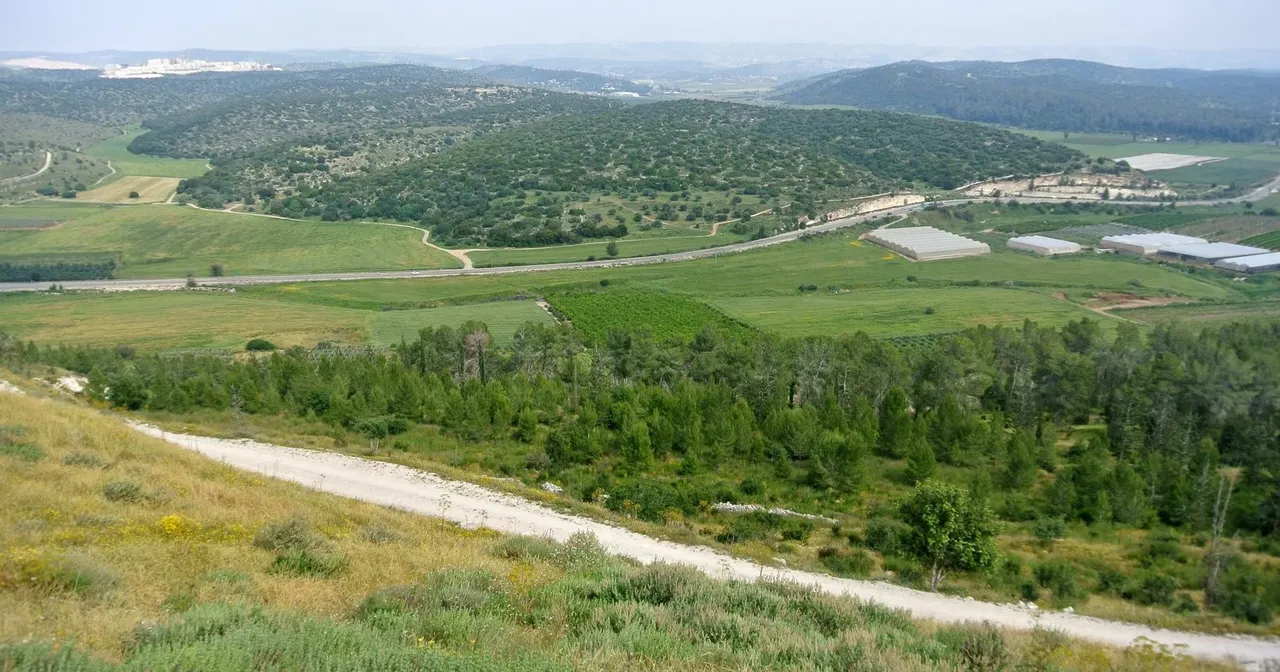
For forty days, morning and evening, a giant walked out of the Philistine camp and dared one man from Israel to come down into the valley and fight him (1 Samuel 17:16). The valley is still there, and you can walk it today.
In this article we follow the story as the King James Bible tells it in 1 Samuel 17, and we look at what archaeologists have found in and around the valley of Elah. Where scholars agree, we say so; where they still debate, we give both sides.
Watch the video: David and Goliath, What Archaeology Found in the Valley
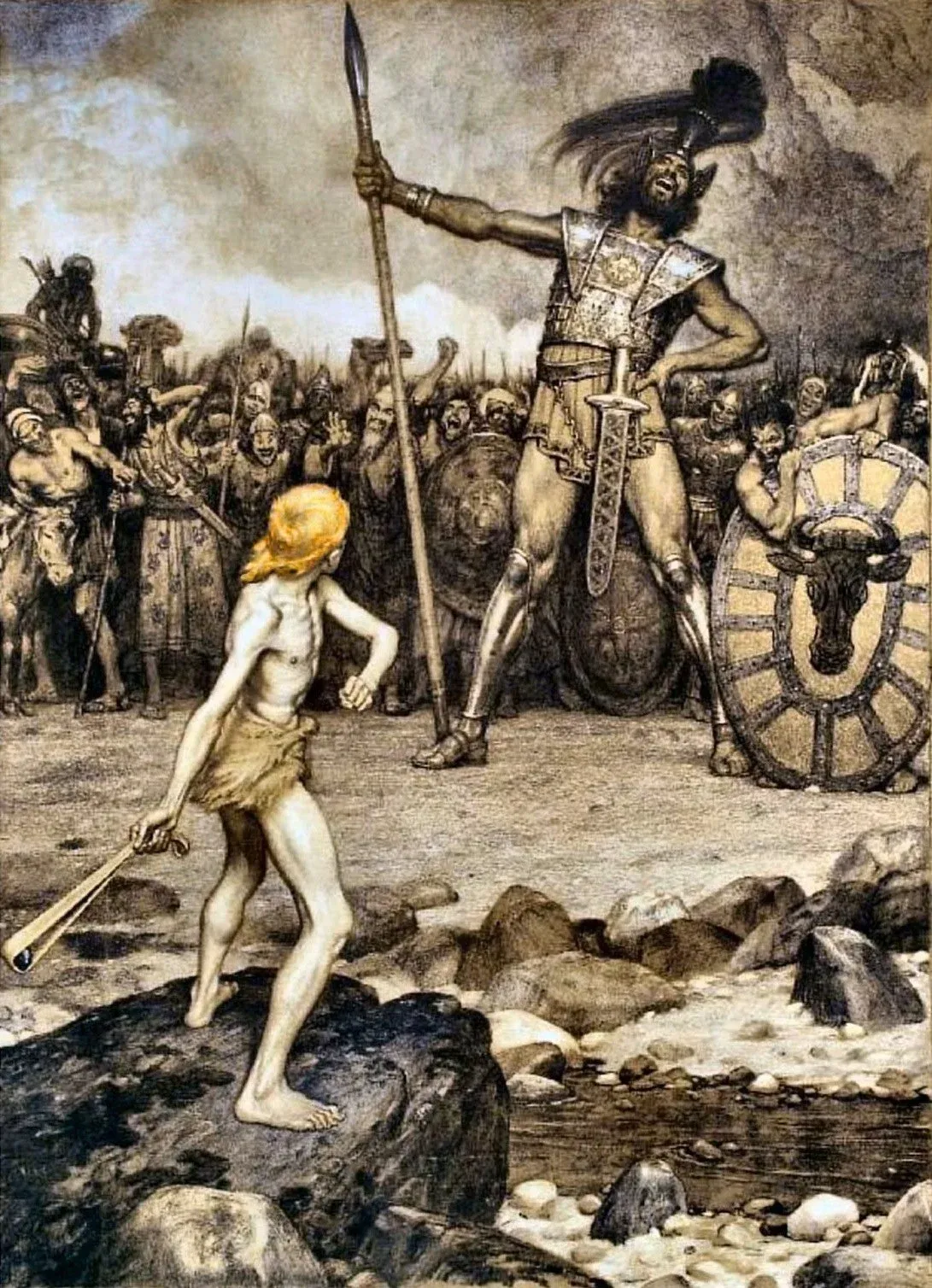
The valley of Elah and the giant of Gath
The Bible gives no date, but historians usually place David around a thousand years before Christ, about three thousand years ago. The chapter opens with the two armies facing each other: the Philistines "pitched between Shochoh and Azekah", Saul and the men of Israel "pitched by the valley of Elah", and "there was a valley between them" (1 Samuel 17:1-3). The valley of Elah lies in the hills southwest of Jerusalem.
"And there went out a champion out of the camp of the Philistines, named Goliath, of Gath, whose height was six cubits and a span."
1 Samuel 17:4 (KJV)
Six cubits and a span is more than nine feet. Goliath had "an helmet of brass upon his head", a coat of mail that weighed "five thousand shekels of brass", and "the staff of his spear was like a weaver's beam" (1 Samuel 17:5-7). Then he shouted to the armies of Israel:
"And the Philistine said, I defy the armies of Israel this day; give me a man, that we may fight together."
1 Samuel 17:10 (KJV)
"When Saul and all Israel heard those words of the Philistine, they were dismayed, and greatly afraid."
1 Samuel 17:11 (KJV)
Four cubits or six?
The King James Version follows the traditional Hebrew text, which reads six cubits and a span. But the oldest Hebrew copy of this verse, a Dead Sea Scroll known as 4QSamuel-a, copied in the first century before Christ, reads four cubits and a span, close to seven feet, like the ancient Greek translation, the Septuagint. Scholars still debate which reading came first. In 2005 J. Daniel Hays argued that four cubits is the original; in 2007 Clyde Billington answered that the two readings need not contradict each other; and those who follow the traditional Hebrew text keep six.
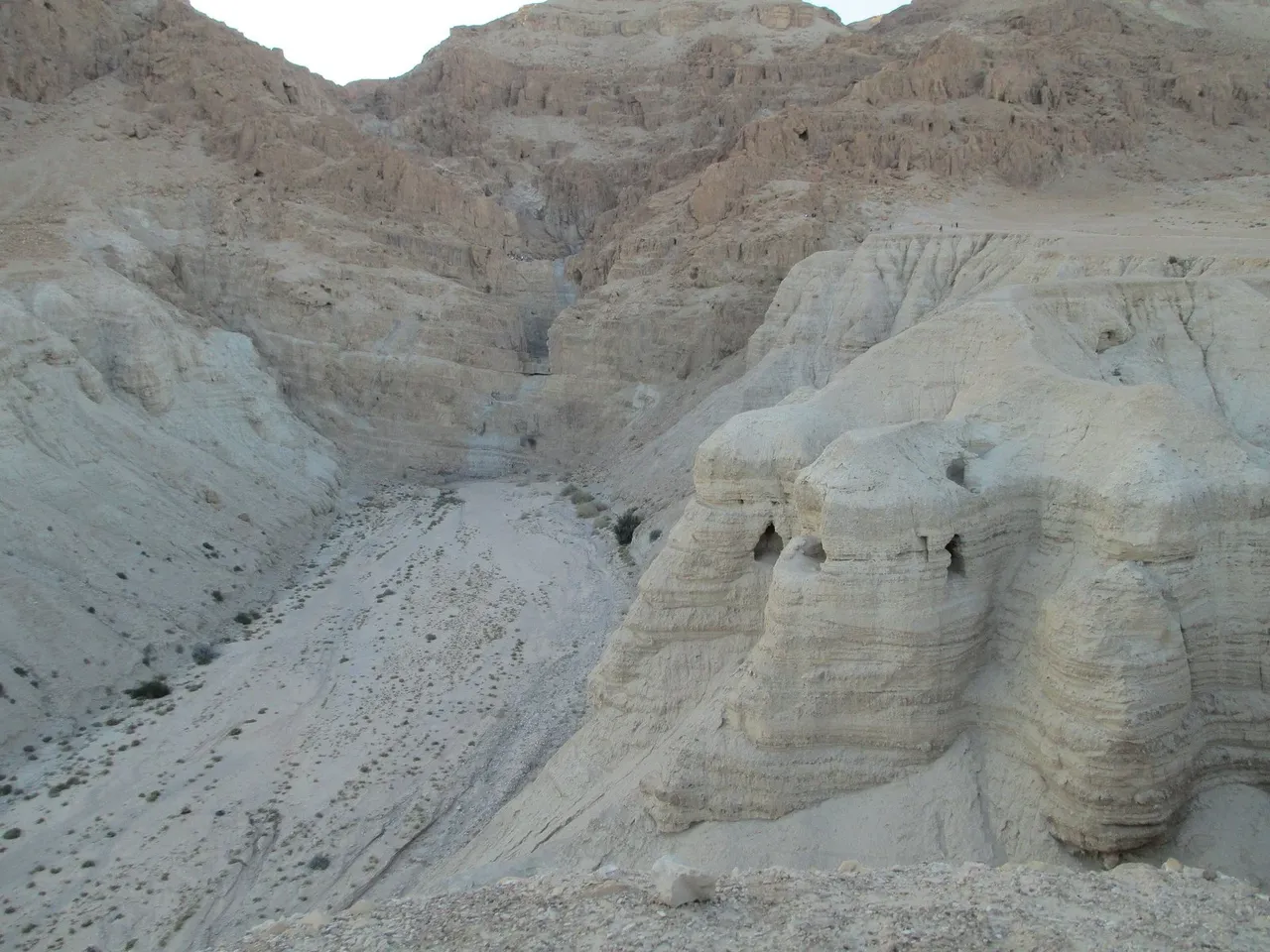
Who were the Philistines?
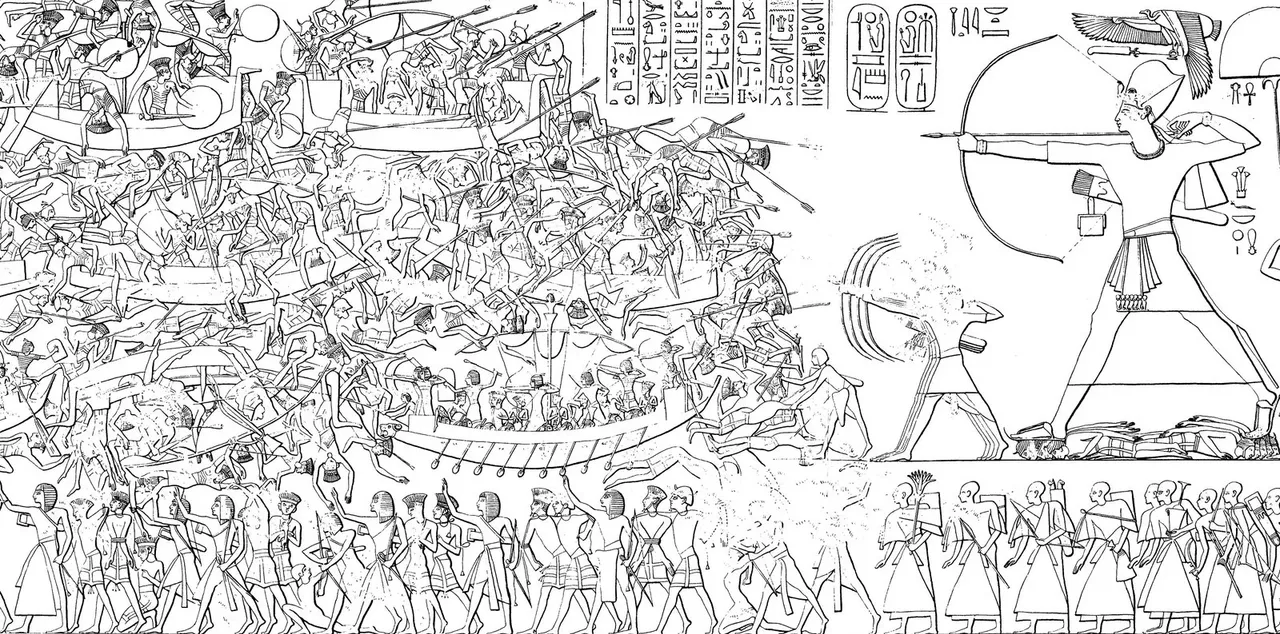
At his temple in Medinet Habu, in Egypt, Pharaoh Ramesses the Third carved his victories over the Sea Peoples, nearly twelve hundred years before Christ. Among the captives are the Peleset, in feathered headdresses, whom most scholars identify with the Philistines.
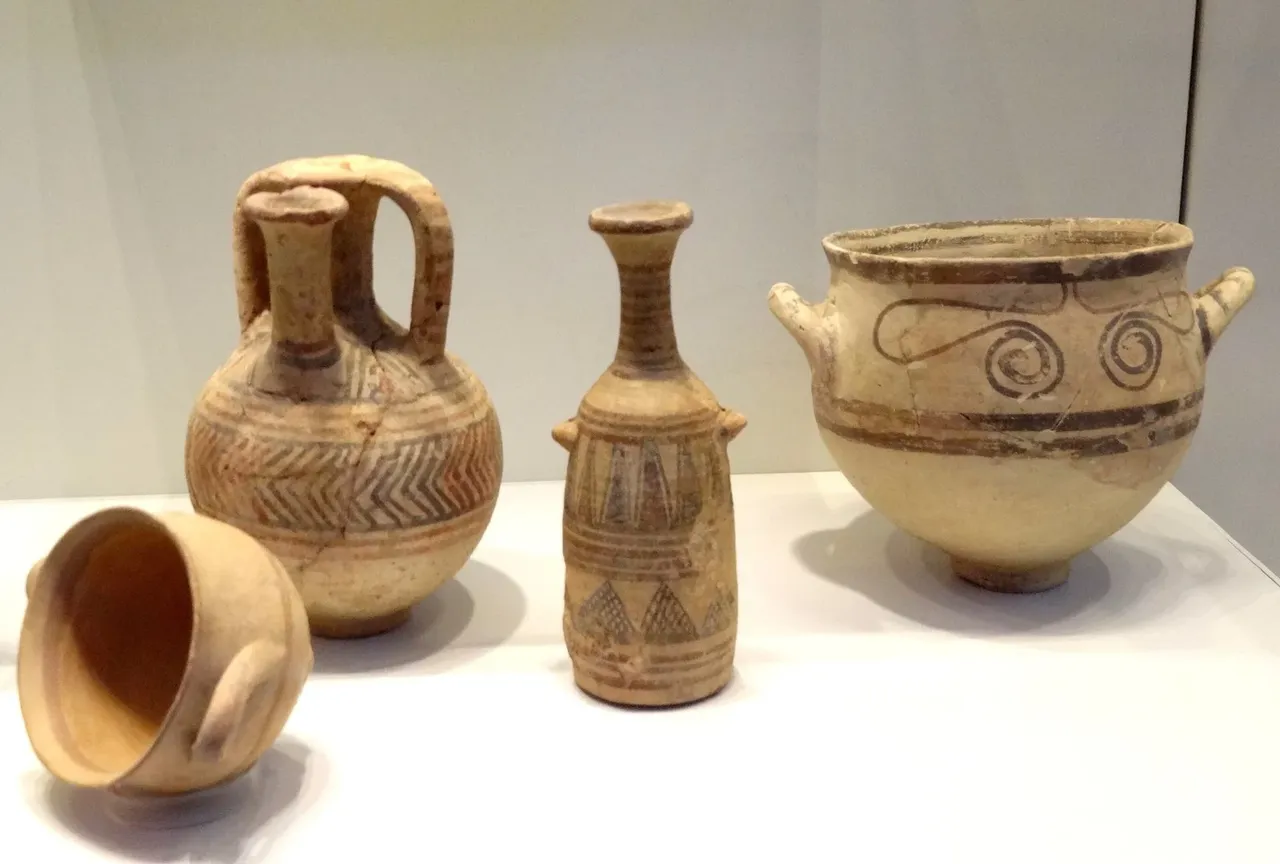
Goliath's hometown, Gath, is identified with a large mound called Tell es-Safi, where a team from Bar-Ilan University, led by archaeologist Aren Maeir, has been digging for years. In 2005 they found a piece of a pottery bowl with two short names scratched on it, ALWT and WLT. They are not Goliath, and the director called that chance very small, but they are similar to his name: names like his were used in Gath.
The shepherd from Bethlehem
The man who answered the giant wasn't a soldier at all. David was the youngest son of Jesse, an Ephrathite of Bethlehem, and his three eldest brothers had followed Saul to the battle (1 Samuel 17:12-14). Jesse sent him to the camp with "parched corn" and "ten loaves" for his brothers (1 Samuel 17:17), and when David asked about the giant, his eldest brother Eliab was angry with him (1 Samuel 17:28).
Saul told him: "thou art but a youth, and he a man of war from his youth" (1 Samuel 17:33). David answered that, while he kept his father's sheep, he had killed a lion and a bear that took a lamb out of the flock (1 Samuel 17:34-36). And he said:
"The LORD that delivered me out of the paw of the lion, and out of the paw of the bear, he will deliver me out of the hand of this Philistine. And Saul said unto David, Go, and the LORD be with thee."
1 Samuel 17:37 (KJV)
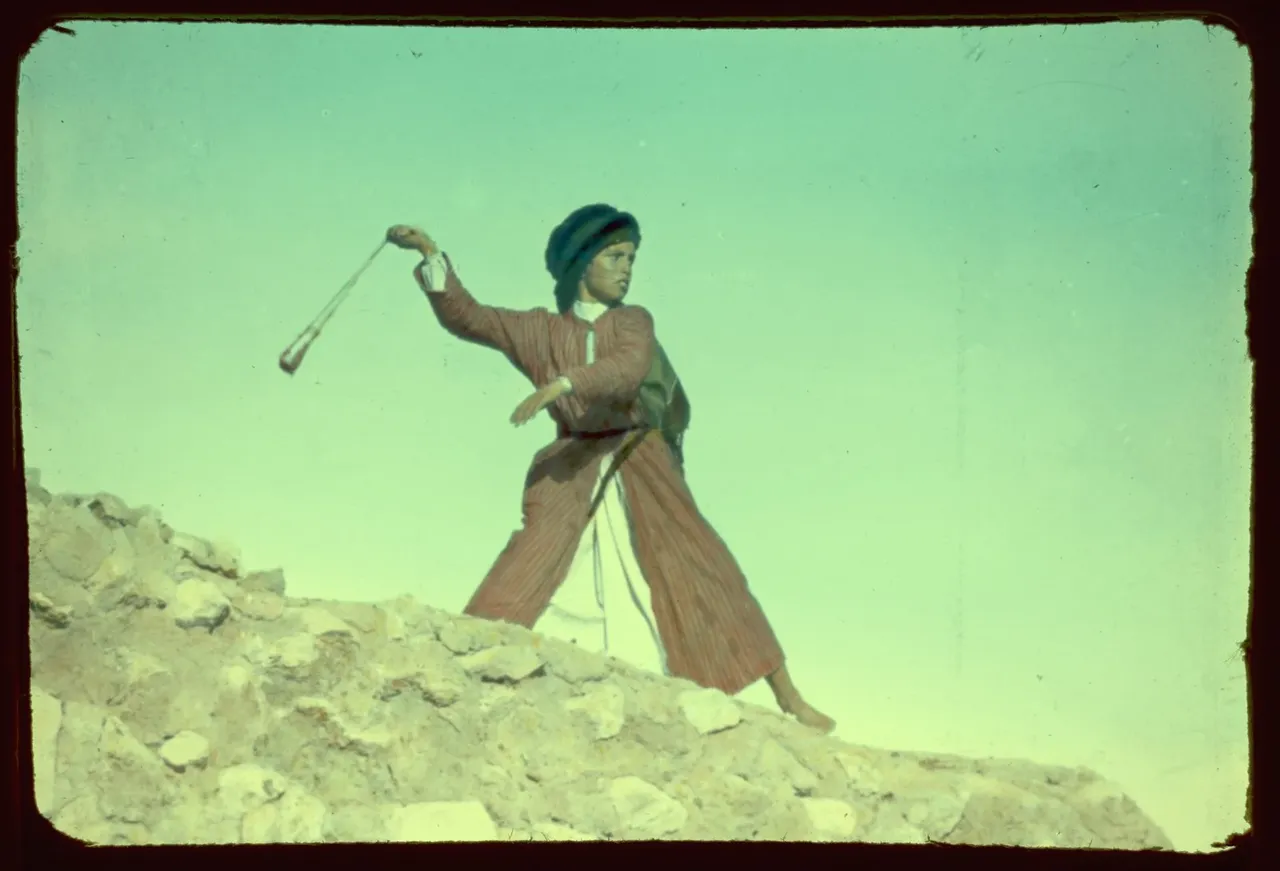
Saul put his own armour on David, but David took it off: "I cannot go with these; for I have not proved them" (1 Samuel 17:39). He "chose him five smooth stones out of the brook", put them in his shepherd's bag, and went out with his sling in his hand (1 Samuel 17:40).
"The battle is the LORD's"
When Goliath saw David, "he disdained him: for he was but a youth, and ruddy, and of a fair countenance", and he cursed David by his gods (1 Samuel 17:42-43). David answered him:
"Thou comest to me with a sword, and with a spear, and with a shield: but I come to thee in the name of the LORD of hosts, the God of the armies of Israel, whom thou hast defied."
1 Samuel 17:45 (KJV)
"And all this assembly shall know that the LORD saveth not with sword and spear: for the battle is the LORD's, and he will give you into our hands."
1 Samuel 17:47 (KJV)
David took a stone from his bag, "slang it, and smote the Philistine in his forehead", and Goliath "fell upon his face to the earth". The text adds: "there was no sword in the hand of David" (1 Samuel 17:49-50). When the Philistines saw that their champion was dead, they fled, and their wounded fell "by the way to Shaaraim, even unto Gath, and unto Ekron" (1 Samuel 17:51-52).
Khirbet Qeiyafa, a fortress above the valley
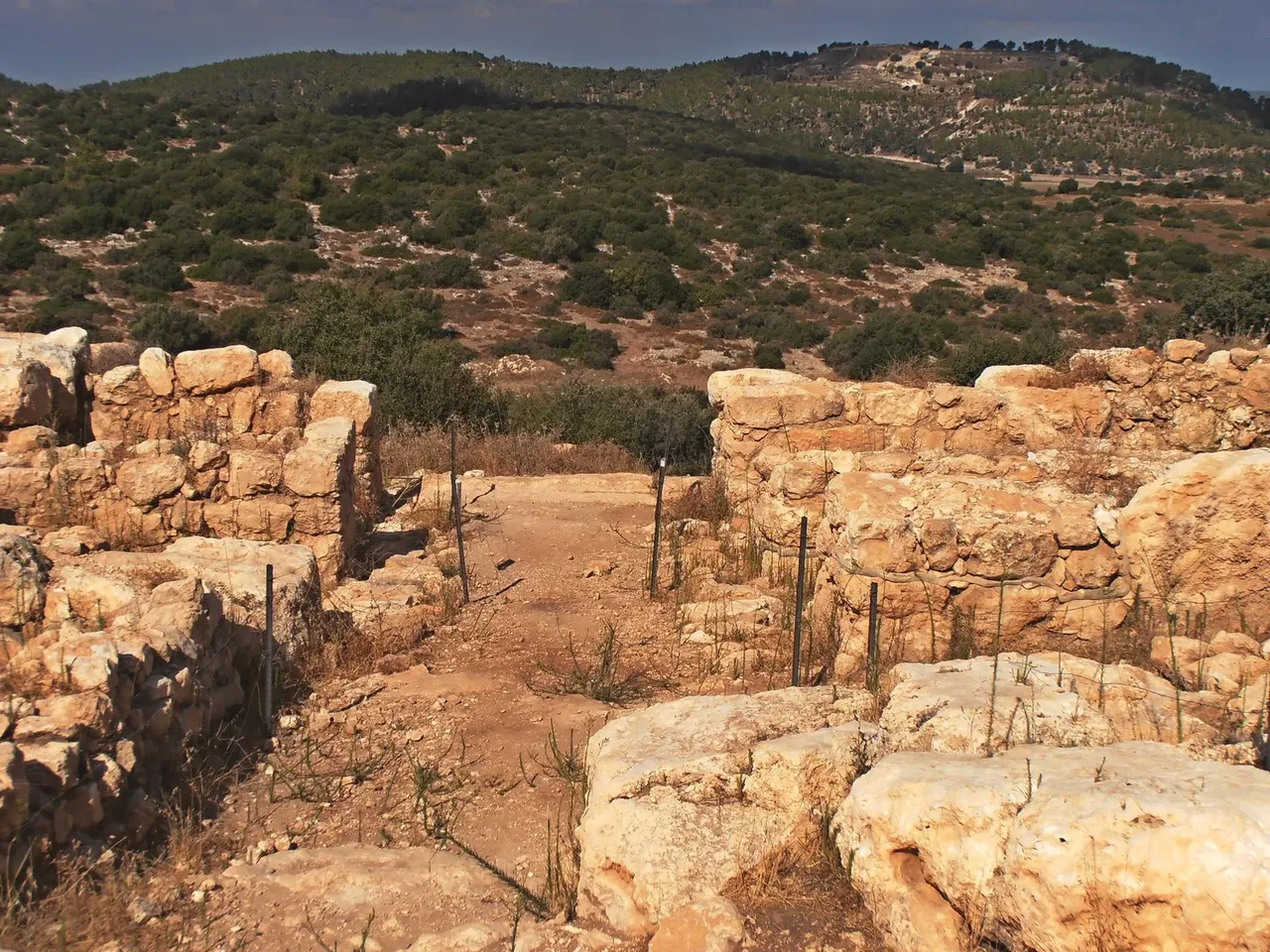
From 2007, the Hebrew University of Jerusalem and the Israel Antiquities Authority excavated a walled town on a hill above the valley of Elah, called Khirbet Qeiyafa, under Yosef Garfinkel and Saar Ganor. Burnt olive pits in its ruins were dated by radiocarbon to around a thousand years before Christ.
The town has two gates, and its excavators connect it with Shaaraim, a name they read as "two gates". Other archaeologists, like Israel Finkelstein, disagree about who built it and what it was called.
A stone that names the house of David
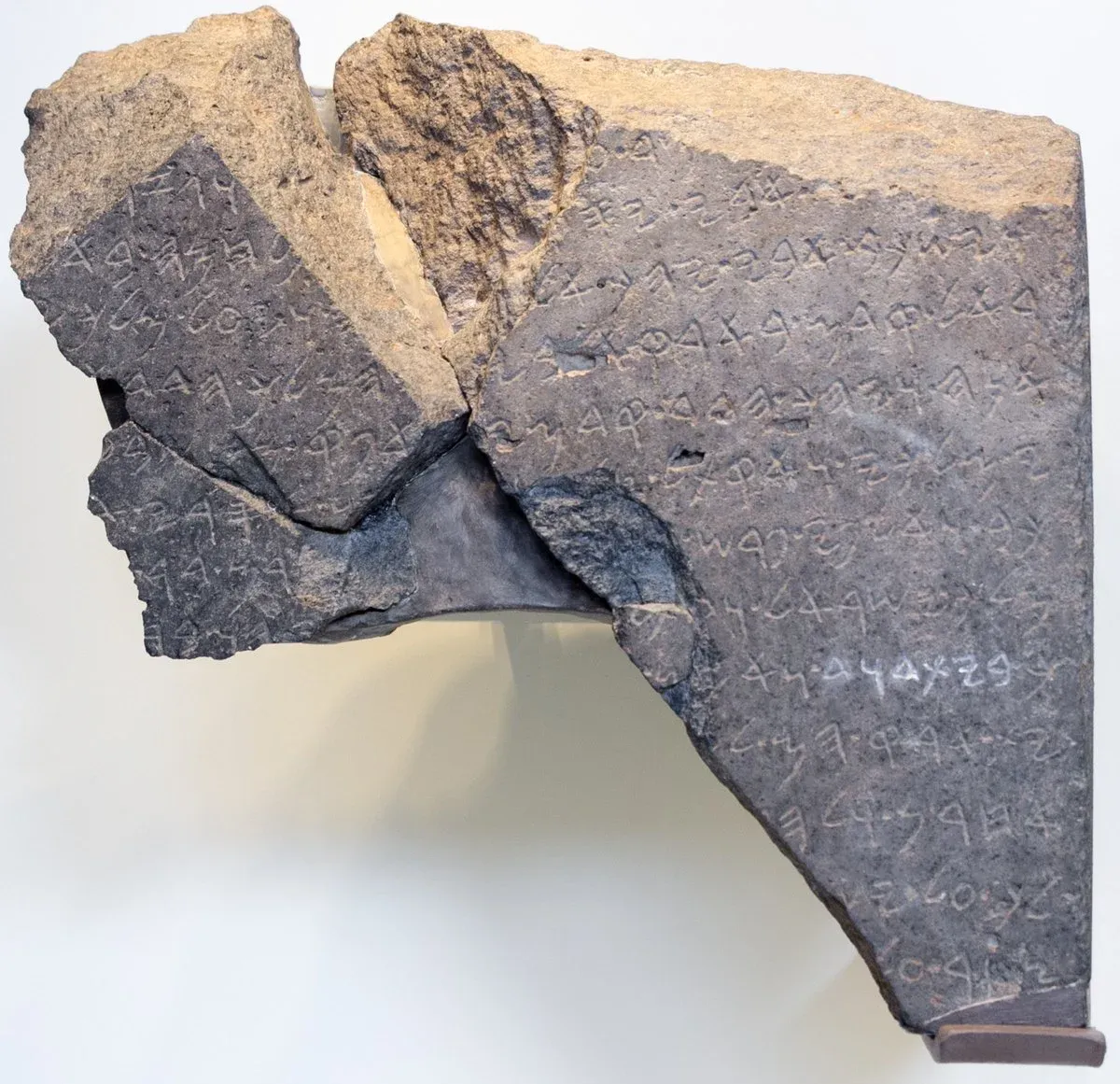
In July 1993, a member of Avraham Biran's excavation team at Tel Dan, in northern Israel, spotted a broken piece of black basalt with writing on it: a victory inscription in Aramaic, by a king of Aram, from the ninth century before Christ.
The king boasts of defeating the king of Israel and a king of the "house of David", one of the oldest mentions of David's family outside the Bible. A few scholars read it differently, but most accept it. The stone is kept at the Israel Museum in Jerusalem.
Afraid in Gath
Years later, the man who faced the giant was afraid in the giant's own city. "David arose and fled that day for fear of Saul, and went to Achish the king of Gath" (1 Samuel 21:10), and there he "was sore afraid of Achish the king of Gath" (1 Samuel 21:12). The title of Psalm 56 in the KJV says David wrote it "when the Philistines took him in Gath":
"What time I am afraid, I will trust in thee. In God I will praise his word, in God I have put my trust; I will not fear what flesh can do unto me."
Psalm 56:3-4 (KJV)
What the story of David and Goliath teaches
Before David ever faced Goliath, the prophet Samuel came to Bethlehem to anoint one of Jesse's sons. When he looked at Eliab, the eldest, the LORD told him:
"But the LORD said unto Samuel, Look not on his countenance, or on the height of his stature; because I have refused him: for the LORD seeth not as man seeth; for man looketh on the outward appearance, but the LORD looketh on the heart."
1 Samuel 16:7 (KJV)
The New Testament names David among those who "through faith" did great things and "out of weakness were made strong" (Hebrews 11:32-34). "The battle is the LORD's" (1 Samuel 17:47), and "What time I am afraid, I will trust in thee" (Psalm 56:3).
Which part of the story surprised you most? Tell us in the comments.
For more Bible stories and the history behind them, watch and subscribe to Koinonet on YouTube.
Sources
- Britannica, "David, king of Israel": britannica.com
- J. Daniel Hays, "Reconsidering the Height of Goliath", Journal of the Evangelical Theological Society 48/4 (2005): galaxie.com
- Clyde Billington, "Goliath and the Exodus Giants: How Tall Were They?", Journal of the Evangelical Theological Society 50/3 (2007): PDF
- Biblical Archaeology Society, "Medinet Habu relief of Philistine prisoners": library.biblicalarchaeology.org
- A. M. Maeir, S. J. Wimmer, A. Zukerman and A. Demsky, "A Late Iron Age I/Early Iron Age II Old Canaanite Inscription from Tell eṣ-Ṣâfī/Gath, Israel", Bulletin of the American Schools of Oriental Research 351 (2008)
- The Jerusalem Post, "Goliath inscription found at Gath" (2005): jpost.com
- Khirbet Qeiyafa excavation, Hebrew University of Jerusalem: khirbet-qeiyafa.huji.ac.il
- Y. Garfinkel and others, "King David's City at Khirbet Qeiyafa: Results of the Second Radiocarbon Dating Project", Radiocarbon (2015): cambridge.org
- I. Finkelstein and A. Fantalkin, "Khirbet Qeiyafa: An Unsensational Archaeological and Historical Interpretation", Tel Aviv 39 (2012): cris.haifa.ac.il
- Bible Odyssey, "The Tel Dan Inscription": bibleodyssey.org
Cover photo: the valley of Elah seen from Tel Azekah. Photo: Wilson44691 (CC0).
Related articles
-
Devotionals
Afraid of What's Coming? What the Bible Says About Fear
King Jehoshaphat feared and prayed: neither know we what to do. What 2 Chronicles 20 and Psalm 27:1 say about fear of the future, in the KJV.
-
Devotionals
Fighting the Same Temptation Again? What the Bible Says
Paul wrote: the evil which I would not, that I do. What Romans 7, Hebrews 4:15 and 1 Corinthians 10:13 say about temptation, in the KJV.
-
Devotionals
Doing the Work of Three People? What the Bible Says
Moses judged the people from morning until evening, until Jethro said: this thing is too heavy for thee. Exodus 18 and Psalm 127 in the KJV.