7 Miracles of Jesus in John's Gospel and What Archaeology Found
The seven miracles of Jesus that John tells before the cross, from Cana to Lazarus, with what archaeology found of the places.
What are the miracles of Jesus in the Gospel of John? John does not tell as many as Matthew, Mark and Luke, but the ones he tells, he tells slowly: a wedding that ran out of wine, a father who walked home with only a word, a man who waited thirty-eight years beside a pool, a boy's five barley loaves, a boat in the dark, a man born blind and a friend four days in the tomb. Here are the seven miracles of Jesus that John tells before the cross, ranked by where John himself places them in his book, with what archaeology has found of some of the places.
Watch the video: 7 Miracles of Jesus in John's Gospel and What Archaeology Found
How this list is ordered
John numbers only the first two miracles. After the wedding at Cana he writes "This beginning of miracles" (John 2:11), and after the healing of the nobleman's son, "This is again the second miracle that Jesus did" (John 4:54). The rest we count as they come in his pages. Number one here is the last miracle he tells before the cross, the raising of Lazarus. John also says plainly that this is not every miracle: "many other signs truly did Jesus in the presence of his disciples, which are not written in this book" (John 20:30). Most historians place the death of Jesus around AD 30.
#7 Water into wine at Cana (John 2:1-11)
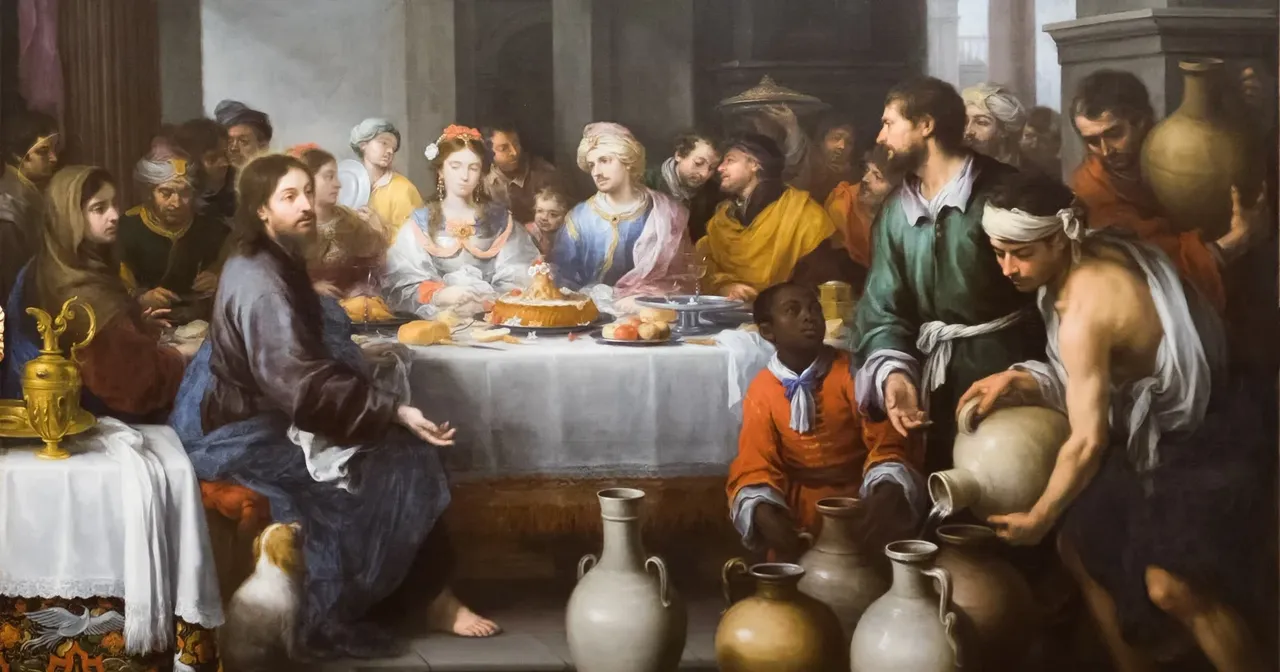
There was a marriage in Cana of Galilee, and the mother of Jesus was there; Jesus and his disciples were invited too. When the wine ran out, his mother told the servants, "Whatsoever he saith unto you, do it" (John 2:5). Then John stops to describe the jars:
"And there were set there six waterpots of stone, after the manner of the purifying of the Jews, containing two or three firkins apiece."
John 2:6 (KJV)
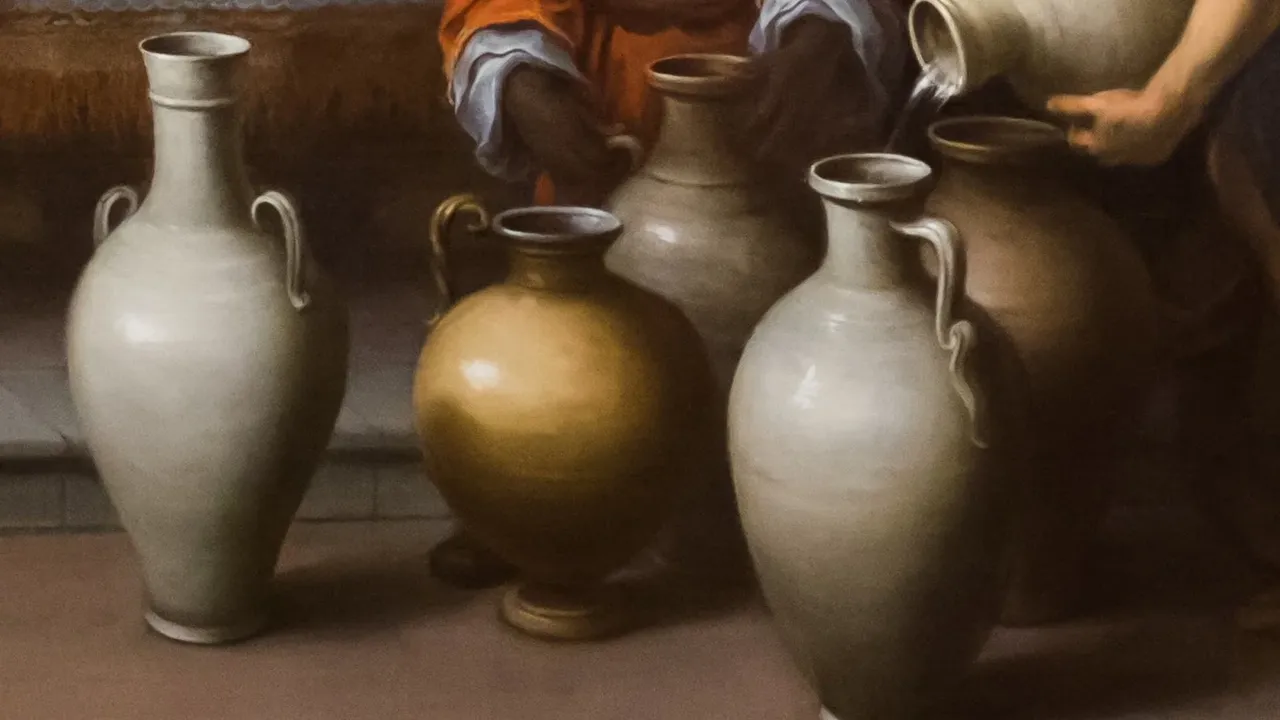
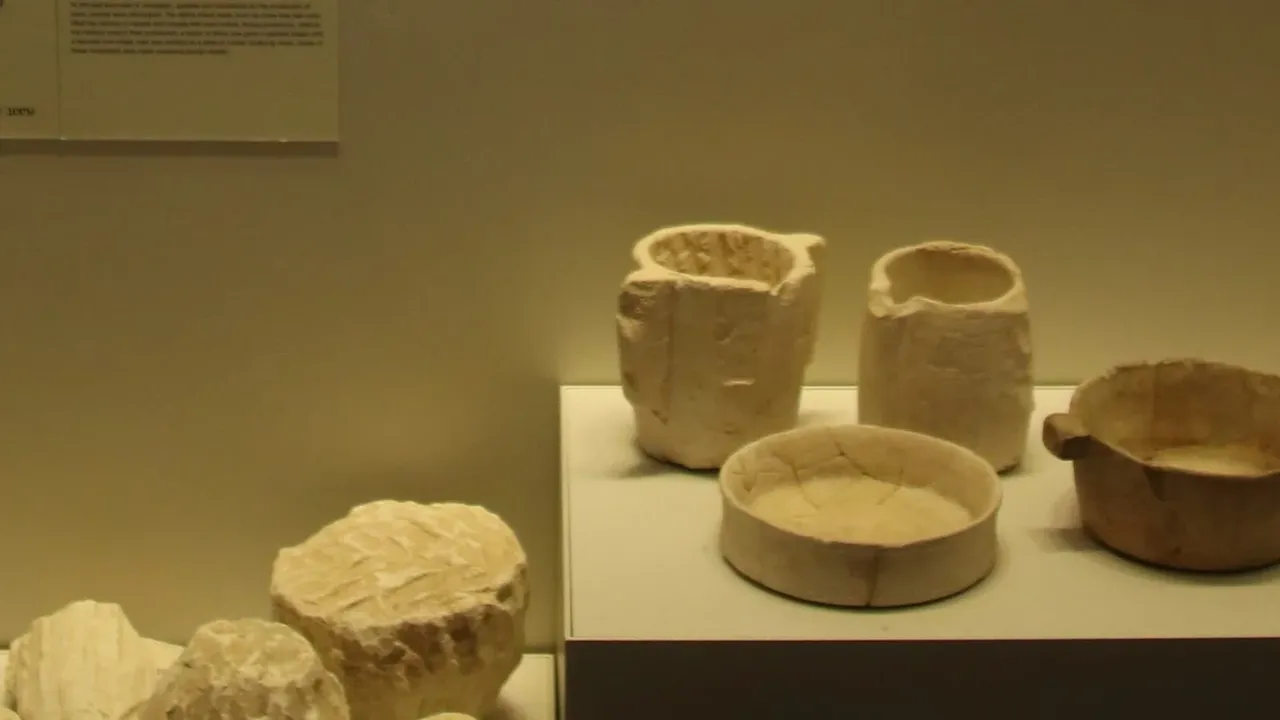
That detail fits what archaeology has found. Jewish families of that time used cups, bowls and jars carved from soft chalkstone, because under their purity law a clay pot could become ritually impure and had to be broken, while stone was believed never to become impure. Near Nazareth, caves where workers carved such vessels about two thousand years ago have been excavated at Einot Amitai (2016) and near Reina (2017). Only cups and bowls were found in those workshops, not large jars, so no one can say where the jars of Cana came from. Where Cana itself stood is also debated: some archaeologists point to Khirbet Qana, a ruined hilltop village north of Nazareth, and others to Kafr Kanna.
The servants filled the jars up to the brim, drew out and took it to the governor of the feast, who tasted "the water that was made wine" and told the bridegroom, "thou hast kept the good wine until now" (John 2:9-10). John ends the scene this way:
"This beginning of miracles did Jesus in Cana of Galilee, and manifested forth his glory; and his disciples believed on him."
John 2:11 (KJV)
#6 The nobleman's son (John 4:46-54)
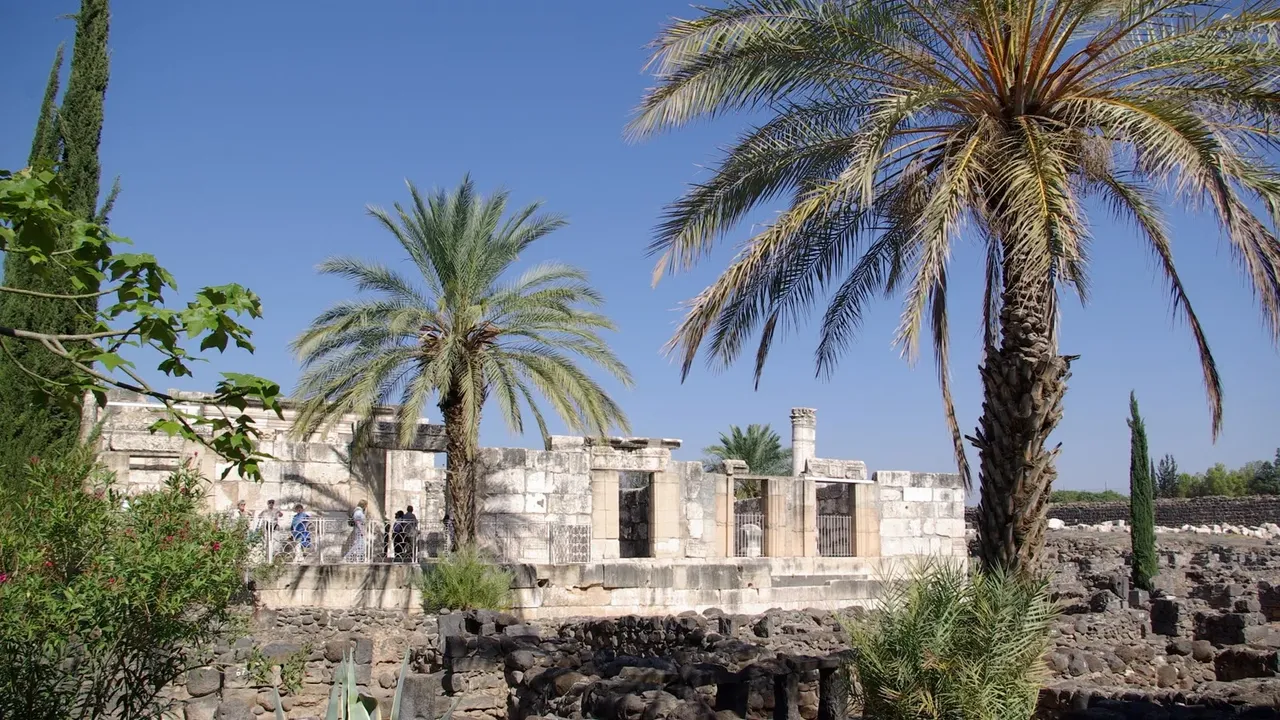
Back in Cana, a nobleman came to Jesus because his son was sick at Capernaum, at the point of death. Capernaum was a small Jewish fishing village by the Sea of Galilee. He besought Jesus to come down and heal his son, and Jesus answered, "Except ye see signs and wonders, ye will not believe" (John 4:48). The father's answer, and what Jesus said to him, are short:
"The nobleman saith unto him, Sir, come down ere my child die. Jesus saith unto him, Go thy way; thy son liveth. And the man believed the word that Jesus had spoken unto him, and he went his way."
John 4:49-50 (KJV)
On the way down, his servants met him and told him, "Thy son liveth." When he asked the hour, they said, "Yesterday at the seventh hour the fever left him" (John 4:52). It was the same hour, "and himself believed, and his whole house" (John 4:53).
#5 The man at the pool of Bethesda (John 5:1-15)
In Jerusalem, at a feast, there was "by the sheep market a pool, which is called in the Hebrew tongue Bethesda, having five porches" (John 5:2). Many sick people lay there, and among them a man who had an infirmity thirty and eight years. Jesus asked him, "Wilt thou be made whole?" His answer is one many people can understand:
"The impotent man answered him, Sir, I have no man, when the water is troubled, to put me into the pool: but while I am coming, another steppeth down before me."
John 5:7 (KJV)
Jesus said to him:
"Rise, take up thy bed, and walk."
John 5:8 (KJV)
And immediately the man was made whole, and took up his bed, and walked. It was the sabbath day, and John says that for this the leaders began to persecute Jesus (John 5:16).
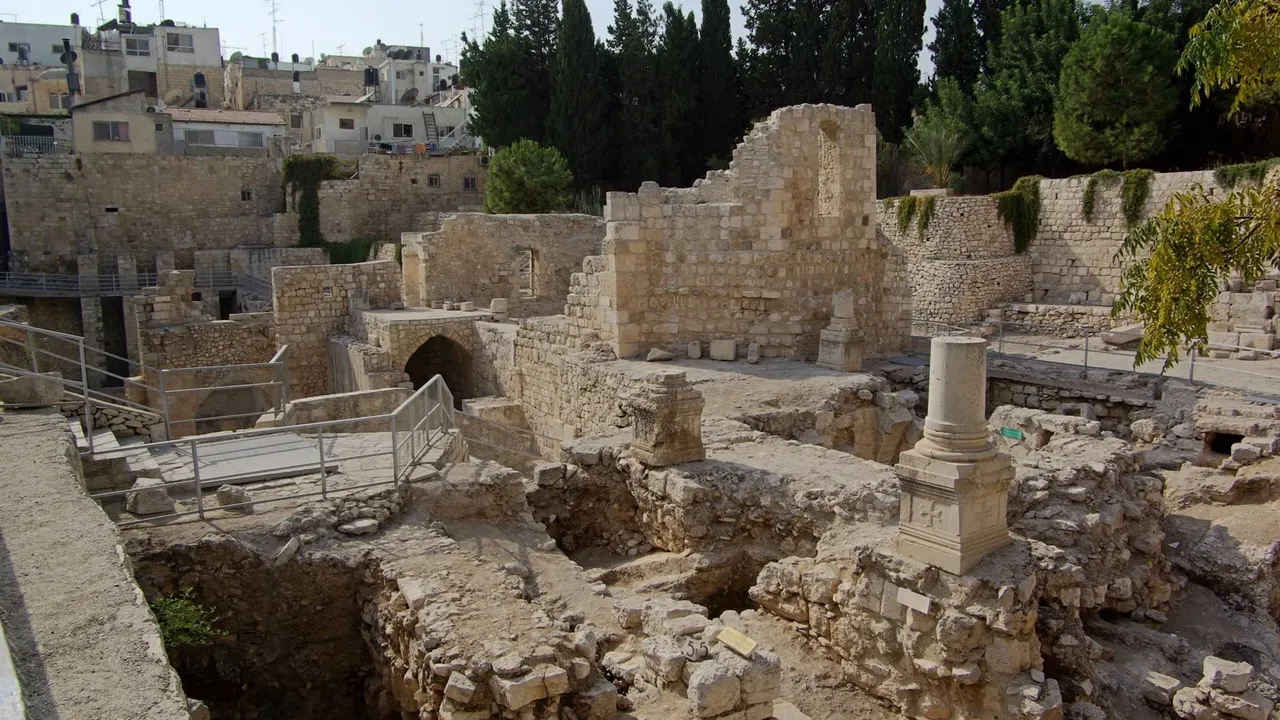
Since the late nineteenth century, excavations near the Church of Saint Anne in Jerusalem have uncovered two large pools side by side, divided by a wall. One way to picture five porches is a colonnade on each of the four sides and one more across the middle. Whether one basin served as a Jewish ritual bath, or the pools were mainly reservoirs, is still debated by archaeologists.
#4 Five barley loaves for five thousand (John 6:1-14)
This is the only miracle of Jesus before the cross that all four Gospels tell (Matthew 14, Mark 6, Luke 9 and John 6). Jesus went over the Sea of Galilee, a great multitude followed him, and the passover was near. He asked Philip, "Whence shall we buy bread, that these may eat?" Philip said two hundred pennyworth of bread was not sufficient. Then Andrew, Simon Peter's brother, spoke:
"There is a lad here, which hath five barley loaves, and two small fishes: but what are they among so many?"
John 6:9 (KJV)
Jesus said, "Make the men sit down," and they sat down, "in number about five thousand" (John 6:10). He took the loaves, gave thanks and gave them out, and the fishes too, as much as they would. Afterwards they filled twelve baskets with the fragments. The people wanted to take him by force to make him a king, so he departed into a mountain alone (John 6:15).
#3 Walking on the sea (John 6:16-21)
That night the disciples set out by ship toward Capernaum. "It was now dark, and Jesus was not come to them. And the sea arose by reason of a great wind that blew" (John 6:17-18). The Sea of Galilee is really a freshwater lake, about thirteen miles long and roughly seven miles wide, lying about seven hundred feet below sea level, and even today strong winds can raise dangerous waves on it surprisingly fast. When they had rowed about five and twenty or thirty furlongs, they saw Jesus walking on the sea, and they were afraid.
"But he saith unto them, It is I; be not afraid."
John 6:20 (KJV)
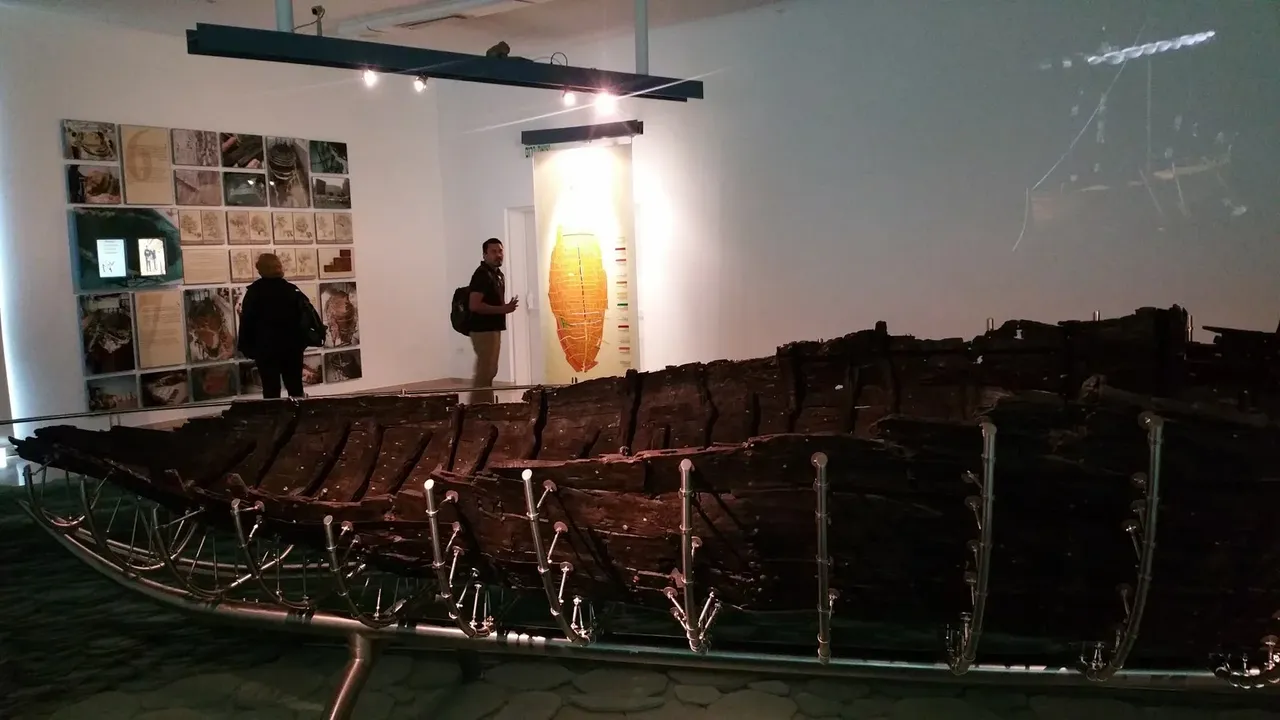
In 1986, a severe drought pulled back the shoreline of the lake, and near Ginosar an old wooden boat appeared in the mud. Nautical archaeologist Shelley Wachsmann led its excavation. It is about twenty-seven feet long and dates to between the first century BC and the first century AD, and today it is on display at the Yigal Allon Museum in Ginosar. Nothing links it to Jesus or his disciples, but it shows the kind of fishing boat used on this lake in that age.
#2 The man born blind (John 9)
Jesus made clay, anointed the eyes of a man blind from his birth and said, "Go, wash in the pool of Siloam." He went his way, washed, and came seeing (John 9:6-7). His neighbours asked, "Is not this he that sat and begged?" His parents, because they were afraid, said only that he was their son and that he was born blind: "ask him" (John 9:20-23). So the man himself told the leaders:
"Since the world began was it not heard that any man opened the eyes of one that was born blind."
John 9:32 (KJV)
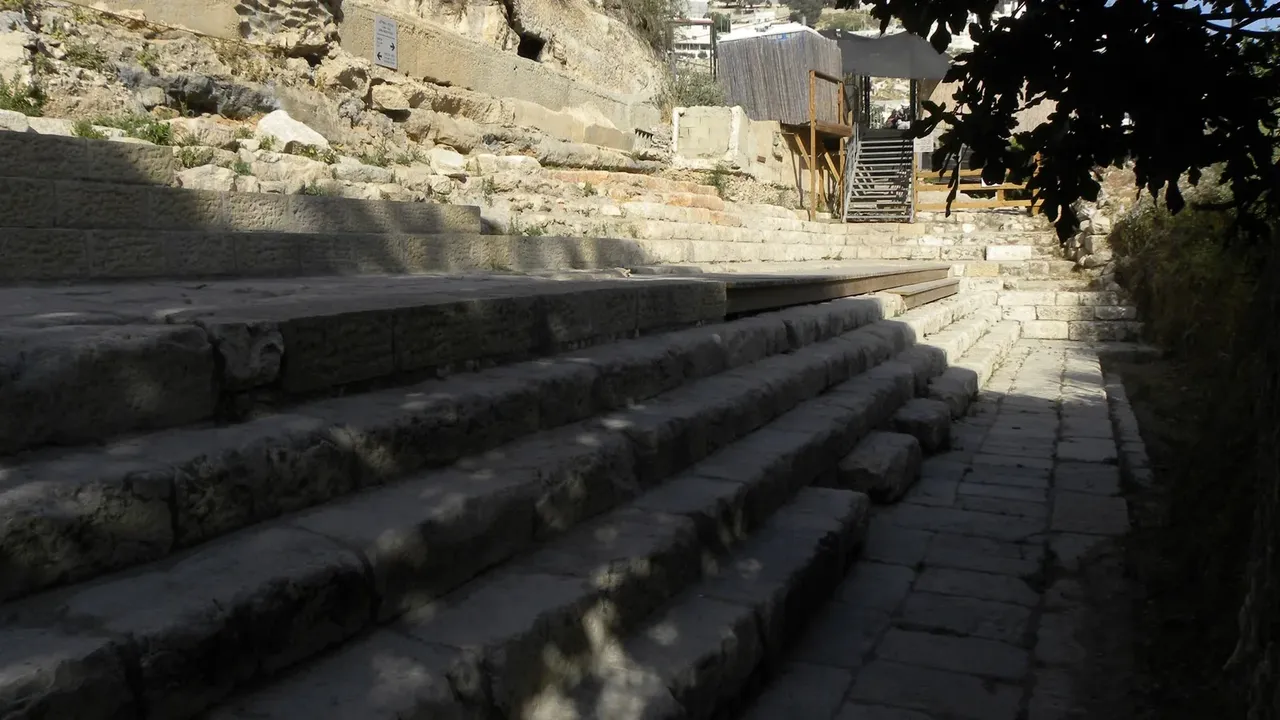
The pool of Siloam from the time of the Second Temple was found in 2004, when ancient steps came to light during repair work in the oldest part of Jerusalem and archaeologists Ronny Reich and Eli Shukron uncovered a large pool with wide flights of steps. The whole story has its own video on our channel.
#1 Lazarus, come forth (John 11)
Bethany sat on the slopes of the Mount of Olives, just outside Jerusalem. Lazarus, the brother of Mary and Martha, was sick, and his sisters sent word to Jesus: "Lord, behold, he whom thou lovest is sick" (John 11:3). Jesus stayed where he was two days more. When he came, Lazarus had lain in the grave four days already. Martha went out to meet him:
"Then said Martha unto Jesus, Lord, if thou hadst been here, my brother had not died."
John 11:21 (KJV)
Jesus answered her:
"Jesus said unto her, I am the resurrection, and the life: he that believeth in me, though he were dead, yet shall he live: And whosoever liveth and believeth in me shall never die. Believest thou this?"
John 11:25-26 (KJV)
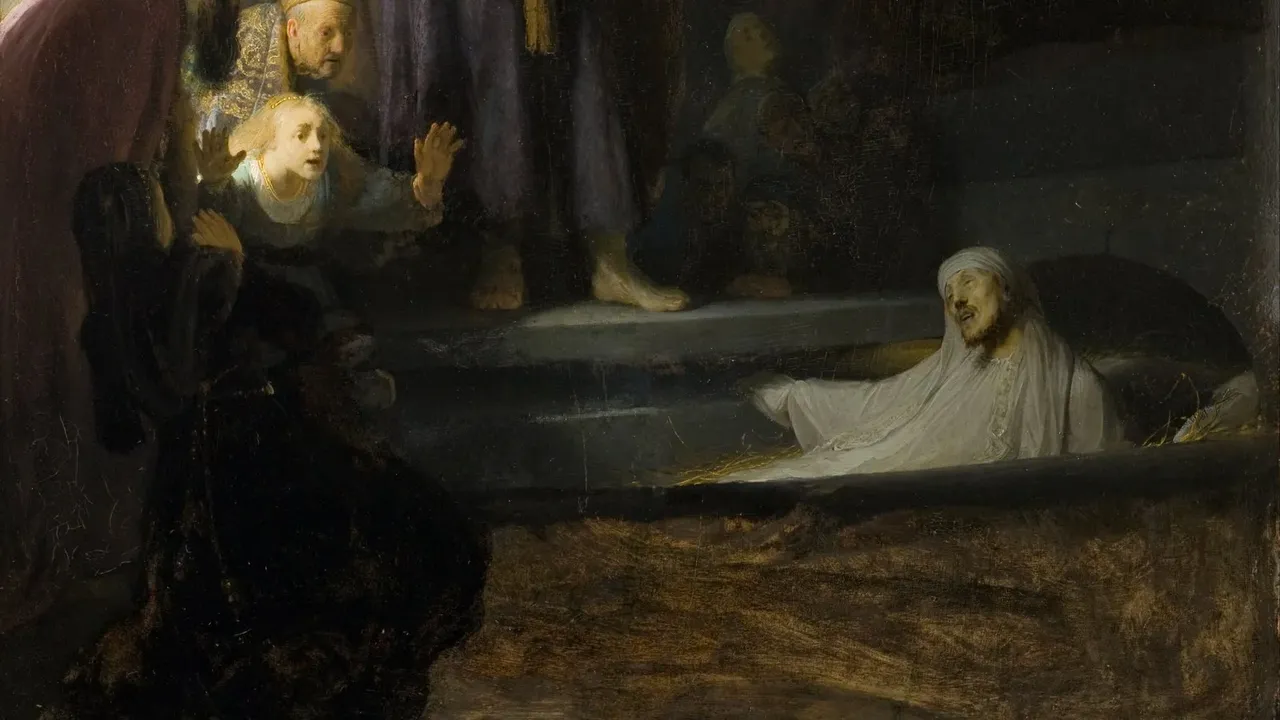
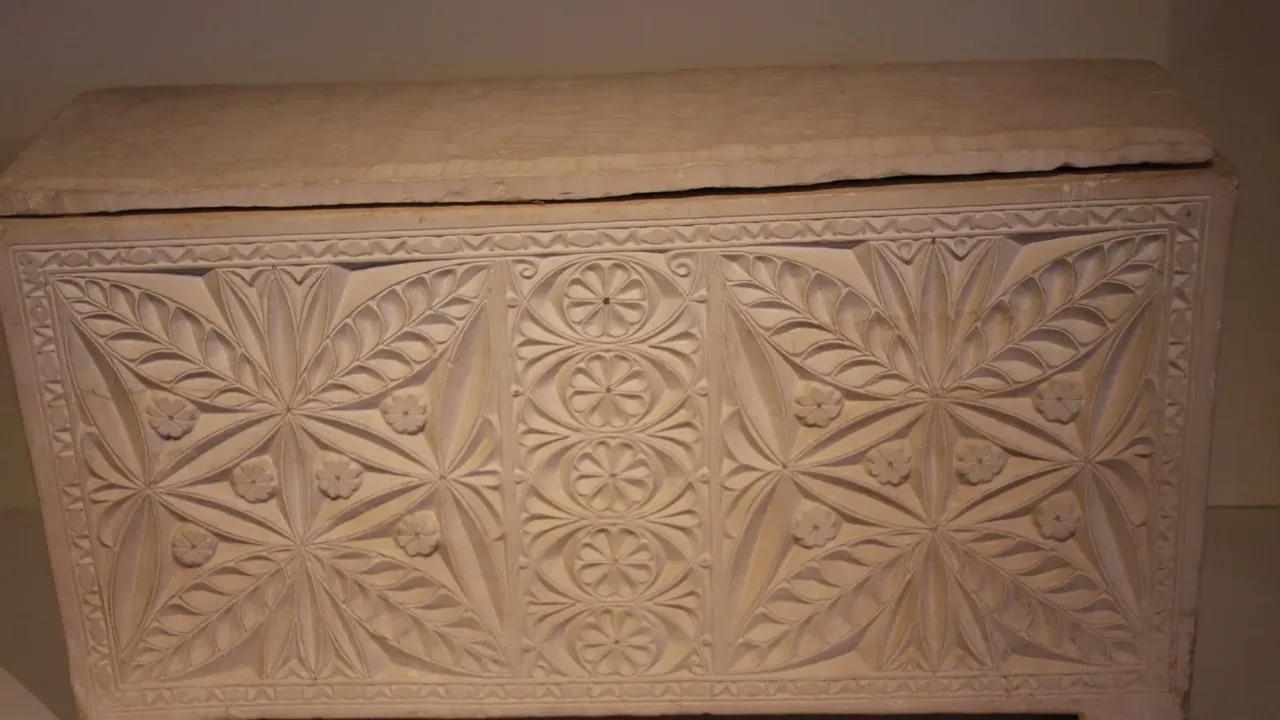
At the grave, "Jesus wept" (John 11:35). "It was a cave, and a stone lay upon it" (John 11:38). Many Jewish families of that time buried their dead in tombs cut into the rock: the body was laid on a stone shelf, and about a year later the bones were gathered into a stone box called an ossuary.
Jesus said, "Take ye away the stone," and he cried with a loud voice, "Lazarus, come forth." And he that was dead came forth, bound hand and foot with graveclothes, and Jesus said, "Loose him, and let him go" (John 11:43-44). Many who saw it believed on him. But the council said, "this man doeth many miracles," and "from that day forth they took counsel together for to put him to death" (John 11:47, 53). That is why it is the last miracle John tells before the cross.
What the Bible teaches
Many of these end the same way. At Cana, his disciples believed on him. In Capernaum, the father believed, and his whole house. The blind man said, "Lord, I believe" (John 9:38). At Bethany, many believed. And near the end of his book, John says why he wrote them down:
"But these are written, that ye might believe that Jesus is the Christ, the Son of God; and that believing ye might have life through his name."
John 20:31 (KJV)
Jesus pointed to his works in the same way when John the Baptist sent from prison to ask about him (Matthew 11:2-4):
"The blind receive their sight, and the lame walk, the lepers are cleansed, and the deaf hear, the dead are raised up, and the poor have the gospel preached to them."
Matthew 11:5 (KJV)
Maybe you are like the father, walking home with only a word, or the man by the pool saying, "I have no man," or Martha saying, "Lord, if thou hadst been here." Jesus spoke to each of them, and his question to Martha is still written down: "Believest thou this?"
The seven miracles at a glance
- #7 Water into wine at Cana: John 2:1-11, "Whatsoever he saith unto you, do it" (his mother, to the servants).
- #6 The nobleman's son: John 4:46-54, "Sir, come down ere my child die" (the father, to Jesus).
- #5 The man at Bethesda: John 5:1-15, "Sir, I have no man" (the sick man, to Jesus).
- #4 The five thousand: John 6:1-14, "what are they among so many?" (Andrew).
- #3 Walking on the sea: John 6:16-21, "It is I; be not afraid" (Jesus, to the disciples).
- #2 The man born blind: John 9, "Since the world began was it not heard" (the man, to the Pharisees).
- #1 Lazarus: John 11, "I am the resurrection, and the life" (Jesus, to Martha).
Which of these seven had you never noticed before? Tell us in the comments on the video, on Koinonet on YouTube.
Sources
- University of Malta: Excavations in Galilee reveal 2,000-year-old stone factory
- Archaeology (AIA): Stone Vessel Workshop Discovered in Galilee
- University of Puget Sound: Khirbet Qana Project
- Matthew J. Grey, Simon Peter in Capernaum (BYU Religious Studies Center)
- Biblical Archaeology Society: The Bethesda Pool
- Urban C. von Wahlde, review of Le Projet Bethesda (1994-2010)
- Encyclopaedia Britannica: Sea of Galilee
- Encyclopaedia Judaica: Kinneret, Lake
- Archaeology (AIA, 2000): the Galilee boat
- Israel Antiquities Authority, Hadashot Arkheologiyot 134: the Stepped Street
- Encyclopaedia Britannica: Bethany
- Eldad Keynan, Jewish Burials (The Bible and Interpretation)
- Helen K. Bond, Dating the Death of Jesus (New Testament Studies)
Cover photo: The Marriage Feast at Cana, Bartolomé Esteban Murillo, Barber Institute of Fine Arts, via Wikimedia Commons (public domain).
Related articles
-
Devotionals
Afraid of What's Coming? What the Bible Says About Fear
King Jehoshaphat feared and prayed: neither know we what to do. What 2 Chronicles 20 and Psalm 27:1 say about fear of the future, in the KJV.
-
Devotionals
Fighting the Same Temptation Again? What the Bible Says
Paul wrote: the evil which I would not, that I do. What Romans 7, Hebrews 4:15 and 1 Corinthians 10:13 say about temptation, in the KJV.
-
Devotionals
Doing the Work of Three People? What the Bible Says
Moses judged the people from morning until evening, until Jethro said: this thing is too heavy for thee. Exodus 18 and Psalm 127 in the KJV.