Pool of Siloam: The Man Born Blind and What Was Found
John 9 in the King James Bible, with the pool of Siloam found in 2004, Hezekiah's tunnel and the Siloam inscription.
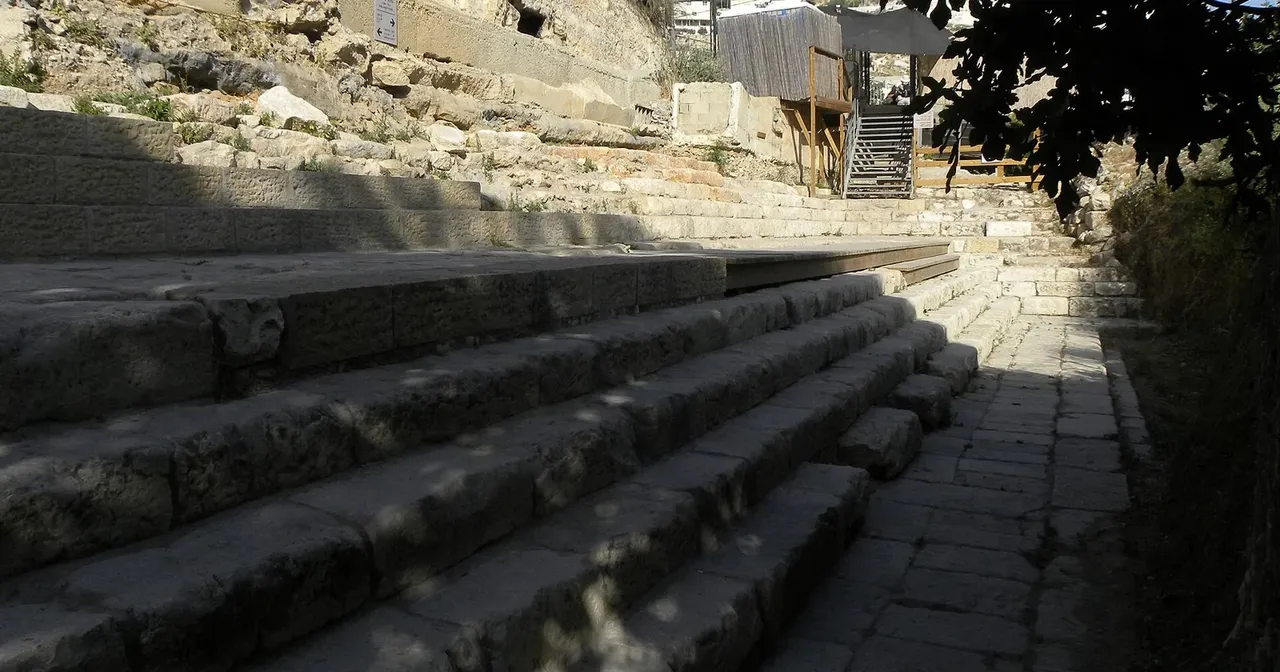
Few stories in the Gospels are as detailed as the one in John 9. A man who was blind from his birth sat begging in Jerusalem. Jesus put clay on his eyes and told him to go and wash in the pool of Siloam, and the man "came seeing" (John 9:7). For centuries, though, nobody could say exactly where that pool had been. In 2004, workers repairing a water pipe in Jerusalem uncovered a stone step, and archaeologists realized it belonged to a pool from the time of Jesus.
In this article we follow the chapter as the King James Bible tells it, and we look at what is known outside the Bible about the pool of Siloam, Hezekiah's tunnel and the inscription carved inside it. Where scholars agree, we say so; where they still debate, we give both sides.
Watch the video: Pool of Siloam, The Man Born Blind and What Was Found
A man blind from birth
The Gospel of John never tells us the man's name. It only says that "as Jesus passed by, he saw a man which was blind from his birth" (John 9:1). His disciples, seeing him there, asked a question about blame, and Jesus answered them.
"Master, who did sin, this man, or his parents, that he was born blind? Jesus answered, Neither hath this man sinned, nor his parents: but that the works of God should be made manifest in him."
John 9:2-3 (KJV)
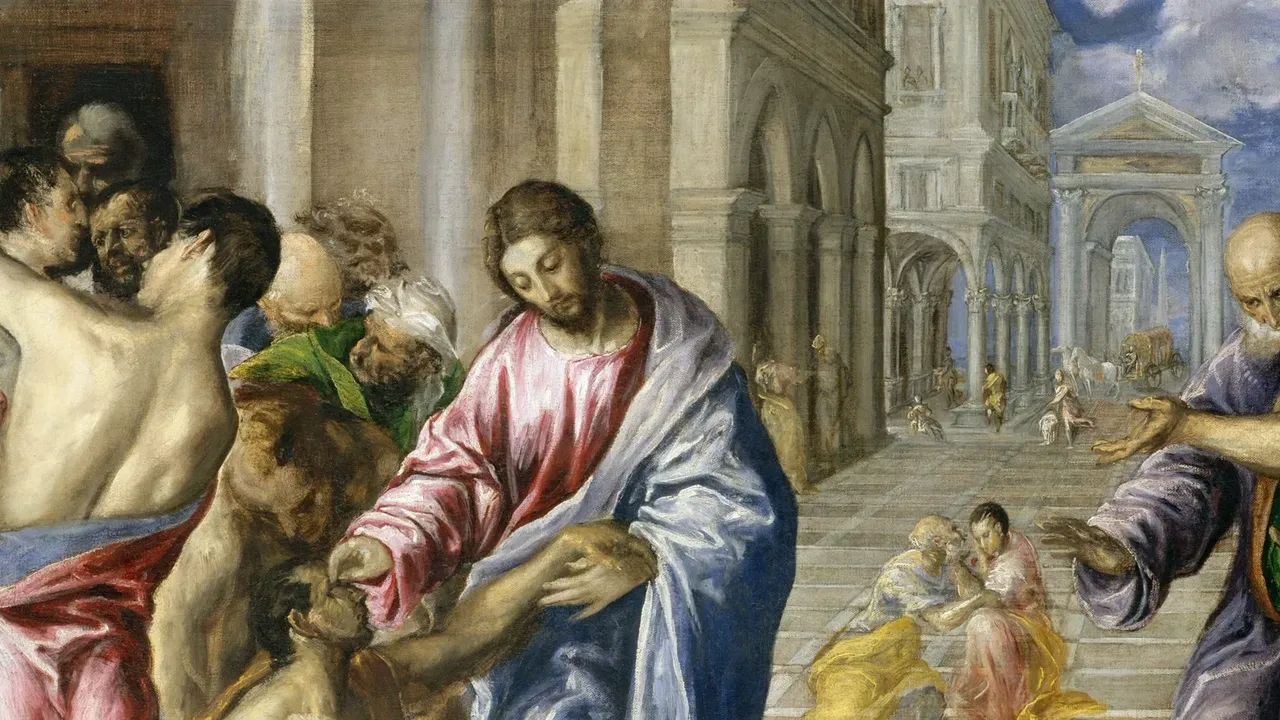
Then Jesus said, "As long as I am in the world, I am the light of the world" (John 9:5). John writes that "he spat on the ground, and made clay of the spittle, and he anointed the eyes of the blind man with the clay" (John 9:6). Then came one instruction:
"And said unto him, Go, wash in the pool of Siloam, (which is by interpretation, Sent.) He went his way therefore, and washed, and came seeing."
John 9:7 (KJV)
The text leaves out the walk, the distance and who helped him get there. It only says that he went, he washed, and he came seeing.
The pool called Sent
John explains that Siloam means "Sent". The name goes back to the Hebrew Shiloah, and centuries earlier the prophet Isaiah had already spoken of "the waters of Shiloah that go softly" (Isaiah 8:6). Those waters came from the Gihon spring, the oldest source of water in Jerusalem, in the valley beside the ancient City of David.
The Bible says that King Hezekiah of Judah, who reigned around 700 BC, "stopped the upper watercourse of Gihon, and brought it straight down to the west side of the city of David" (2 Chronicles 32:30). The book of Kings remembers it too:
"And the rest of the acts of Hezekiah, and all his might, and how he made a pool, and a conduit, and brought water into the city, are they not written in the book of the chronicles of the kings of Judah?"
2 Kings 20:20 (KJV)
Hezekiah's tunnel and the Siloam inscription
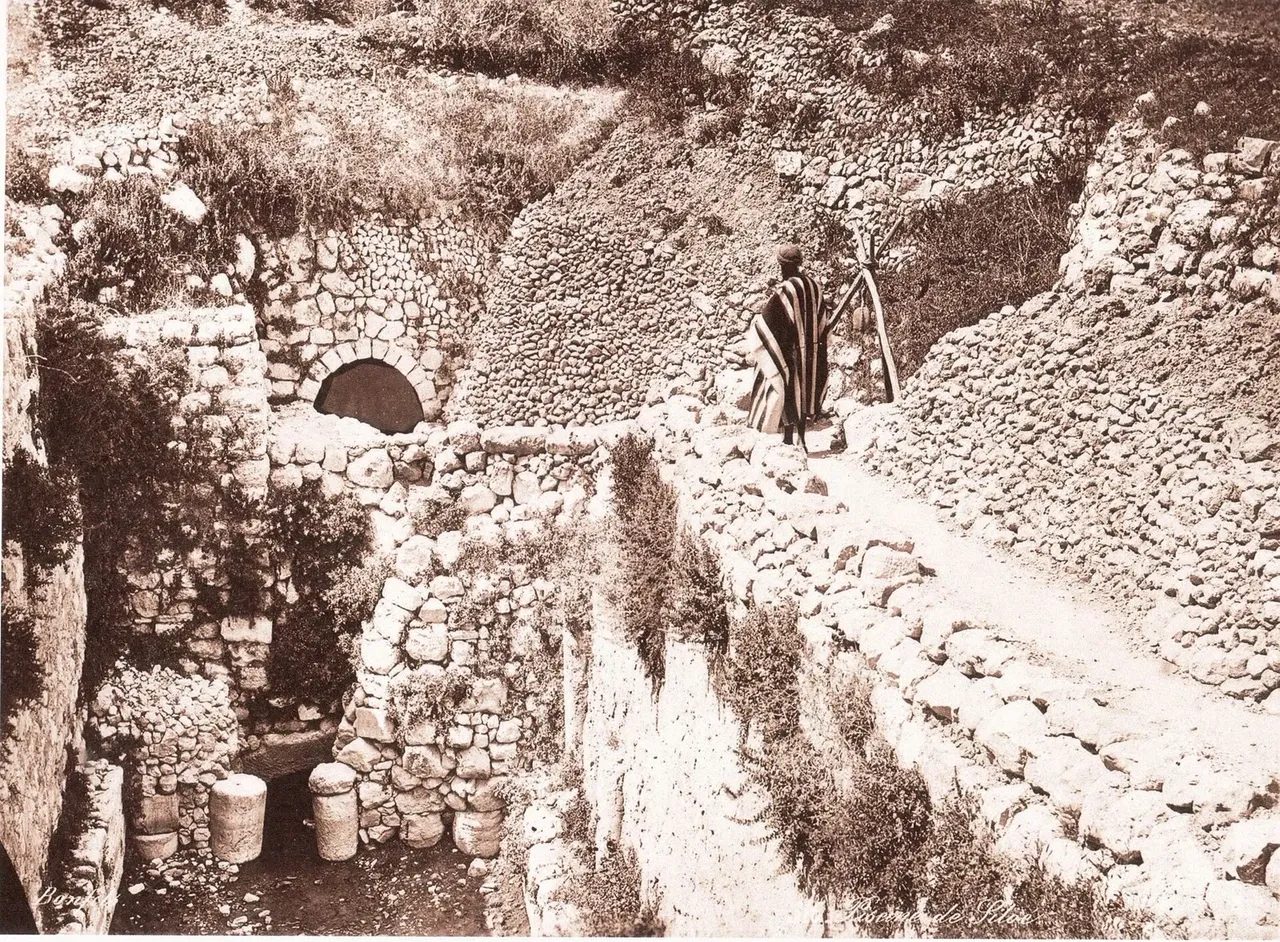
Outside the Bible, that conduit can still be seen. It is a channel cut through solid rock, about 530 meters long (roughly a third of a mile), that carries water from the Gihon spring to the area of Siloam. In 1880 a young student exploring the tunnel found an inscription carved into its wall in ancient Hebrew letters. It describes how two teams of workers, cutting from opposite ends, heard each other's voices through the rock and broke through, so that the water flowed to the pool. The inscription was cut out of the wall in 1890 and is kept today in the Istanbul Archaeology Museums.
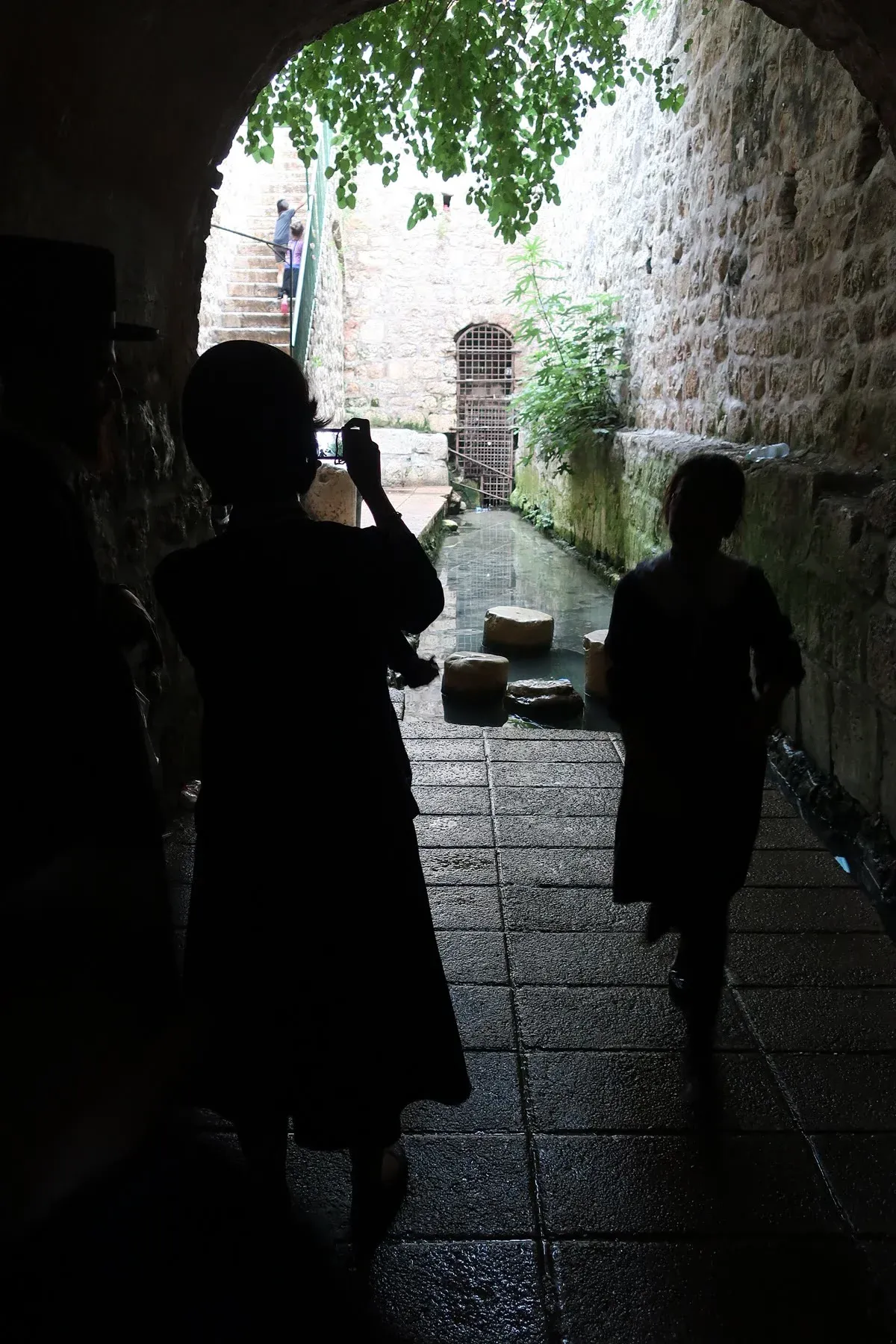
When was the tunnel cut? In 2003, a team of scientists from the Hebrew University of Jerusalem, the Geological Survey of Israel and the University of Reading dated plaster and stone formations from inside the tunnel and placed it around 700 BC, the time of Hezekiah. Most scholars connect the tunnel with him, though some archaeologists who excavated near the spring argue that parts of the water system around it are older.
The pool found in 2004
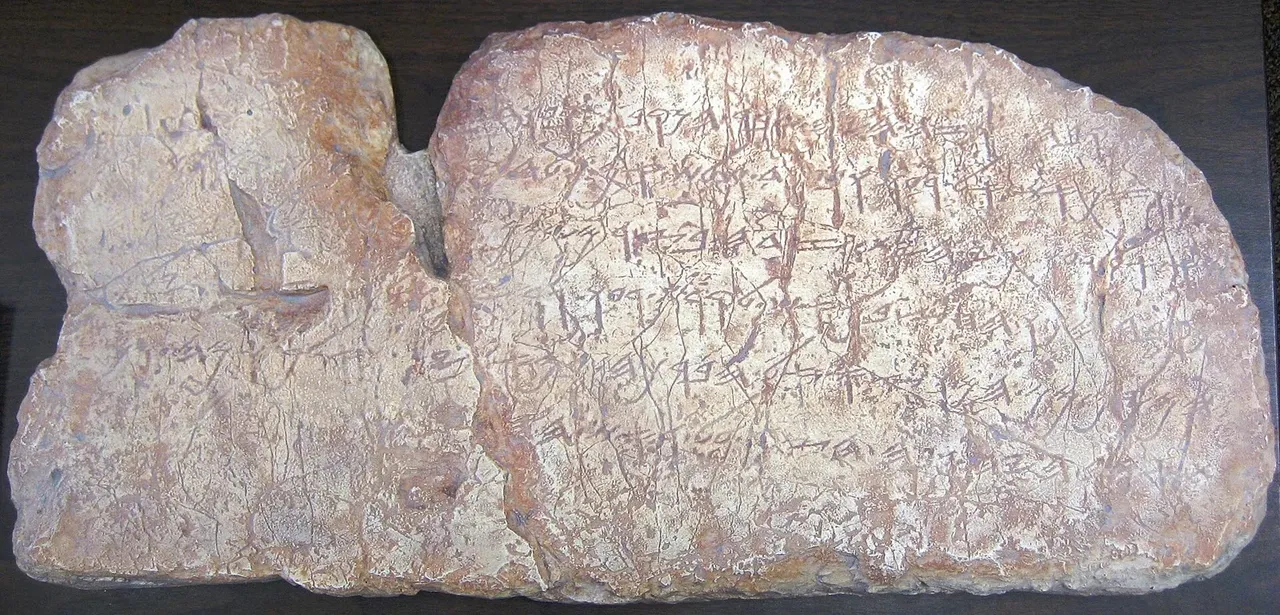
For a long time, visitors were shown a small pool near the tunnel's exit as the pool of Siloam. That pool was built hundreds of years after Jesus. In 2004, during repairs to a water pipe, workers uncovered ancient stone steps a little to the southeast, and archaeologists Ronny Reich and Eli Shukron of the Israel Antiquities Authority realized they belonged to a much older pool.
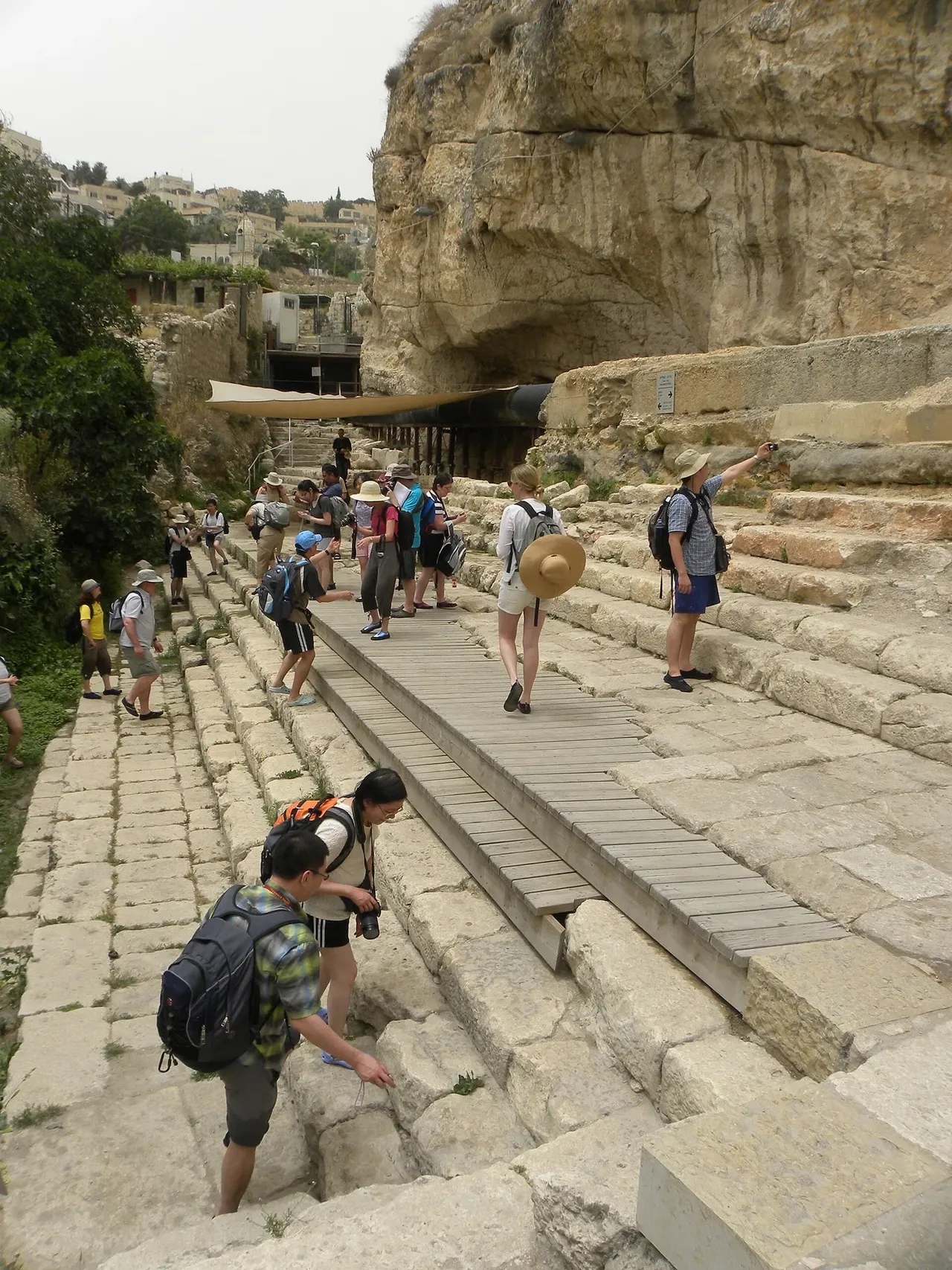
As they dug, the pool began to appear: wide stone steps in groups of five, with landings between them, going down toward the water. Coins and pottery show that it was in use in the late Second Temple period, the time of Jesus, until the Romans destroyed Jerusalem in AD 70.
What was it used for? Reich and Shukron proposed that it was a large ritual bath, where pilgrims washed to be ritually clean before going up to the Temple. Yoel Elitzur of the Hebrew University argued that it was a public swimming pool. Scholars still debate it. The Bible itself only tells us that a man who was blind washed there.
The stepped street
From the pool, a wide stepped street climbed about 600 meters toward the Temple Mount. In a study published in 2019, the archaeologists who excavated it reported more than 100 coins found under its paving stones, the latest from around AD 17 to 31, and dated its construction to the time of Pontius Pilate, the Roman governor of Judea.
"Is not this he?"
When the man came back seeing, his neighbours could not agree. "Is not this he that sat and begged?" they asked (John 9:8).
"Some said, This is he: others said, He is like him: but he said, I am he."
John 9:9 (KJV)
They brought him to the Pharisees, and John adds that "it was the sabbath day when Jesus made the clay, and opened his eyes" (John 9:14). The man told his story again: "He put clay upon mine eyes, and I washed, and do see" (John 9:15). Some of the Pharisees said, "This man is not of God, because he keepeth not the sabbath day", others asked how a sinner could do such miracles, "and there was a division among them" (John 9:16).
Then they called his parents. They answered, "We know that this is our son, and that he was born blind" (John 9:20), but they would not say how he now saw. John explains that they feared being put out of the synagogue, so they said, "He is of age; ask him" (John 9:23).
"One thing I know"
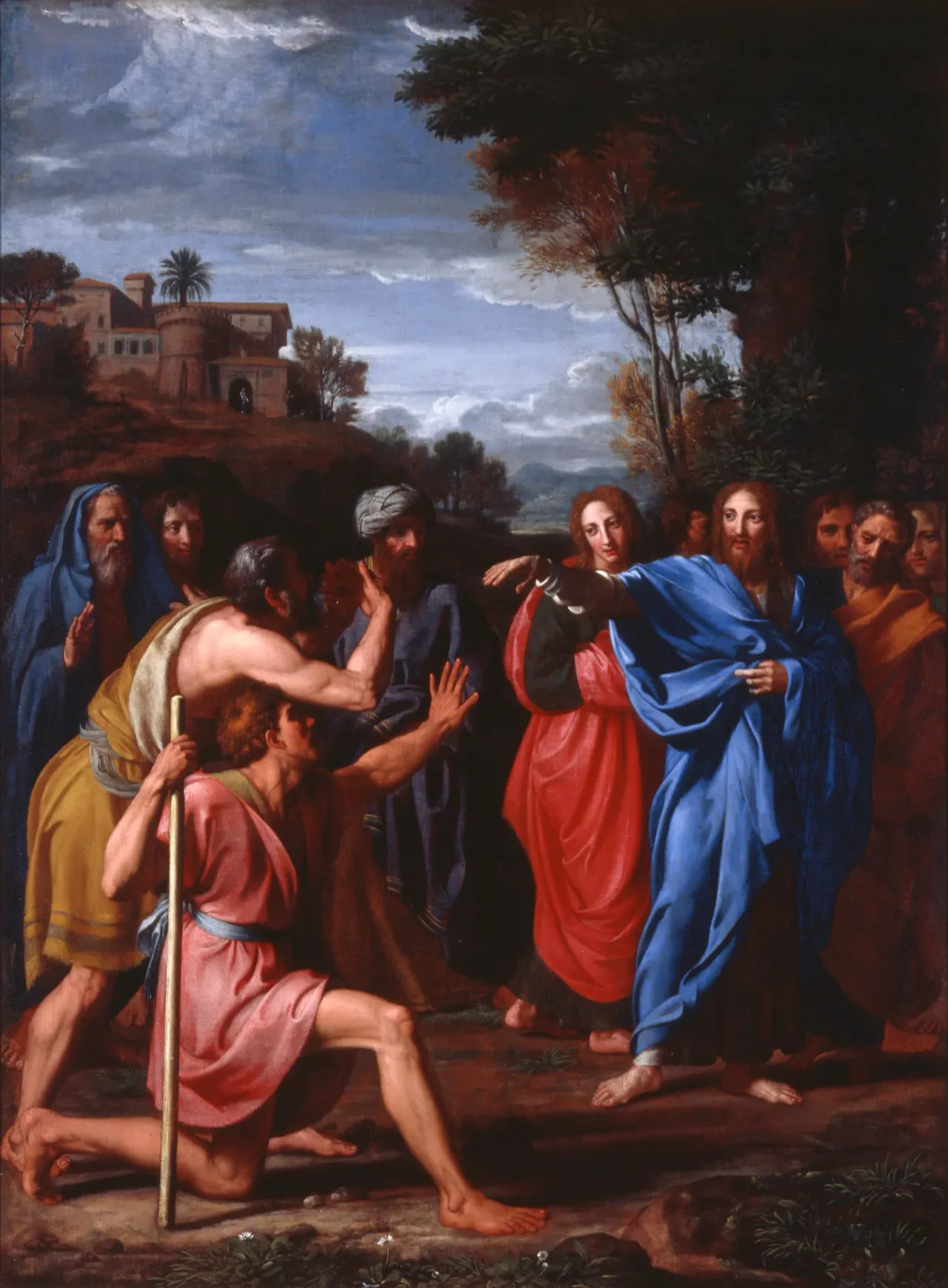
The man was called a second time. "Give God the praise: we know that this man is a sinner," they told him (John 9:24). He did not argue about what he could not explain. He answered with the one thing he was sure of.
"He answered and said, Whether he be a sinner or no, I know not: one thing I know, that, whereas I was blind, now I see."
John 9:25 (KJV)
They asked again how it happened, and he said, "I have told you already" (John 9:27). He reminded them: "Since the world began was it not heard that any man opened the eyes of one that was born blind" (John 9:32). And "they cast him out" (John 9:34).
But the chapter does not end there. "Jesus heard that they had cast him out; and when he had found him, he said unto him, Dost thou believe on the Son of God?" The man answered, "Who is he, Lord, that I might believe on him?" (John 9:35-36).
"And Jesus said unto him, Thou hast both seen him, and it is he that talketh with thee. And he said, Lord, I believe. And he worshipped him."
John 9:37-38 (KJV)
What the story teaches
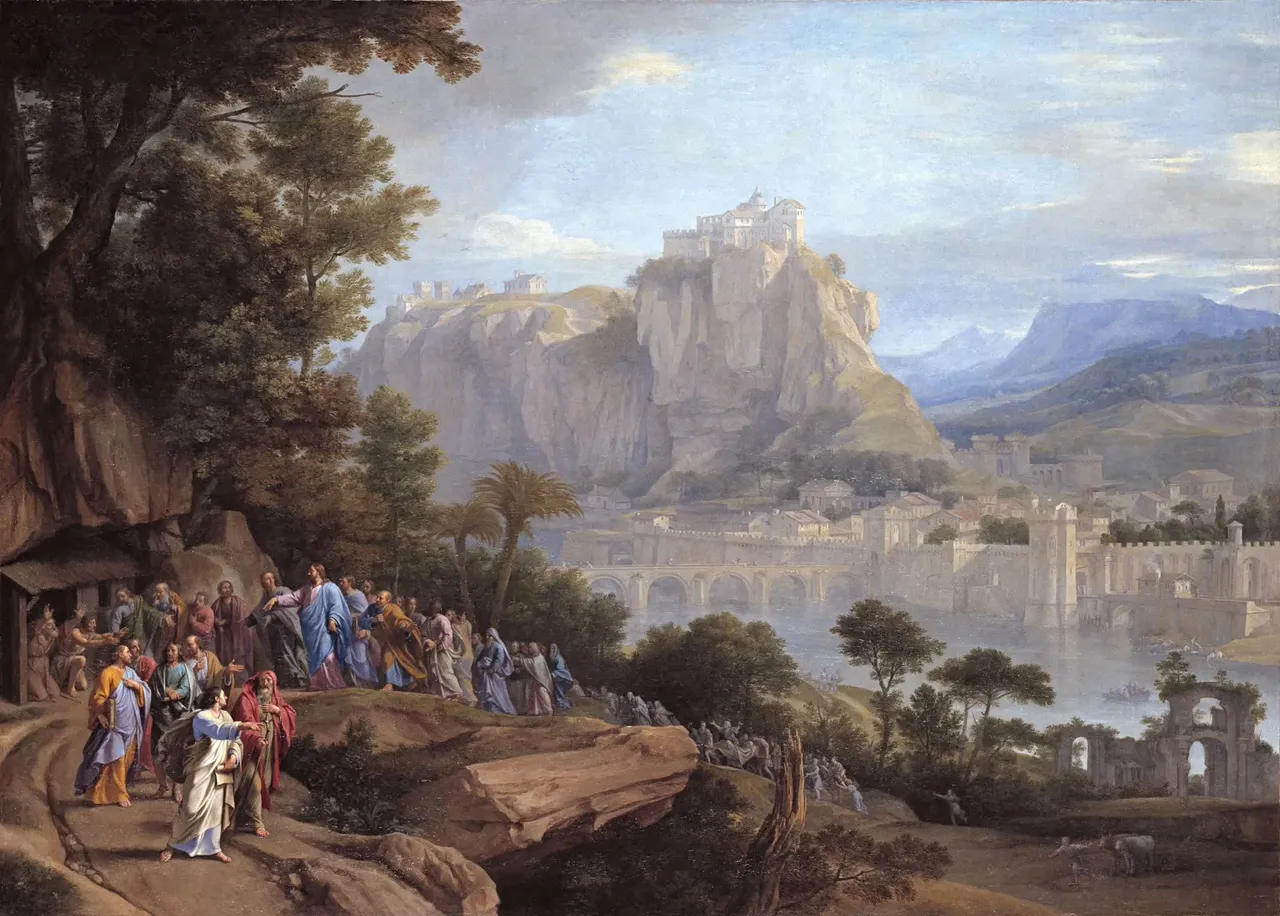
The chapter begins with a question about blame, and Jesus answers that "the works of God should be made manifest in him" (John 9:3). The man did not understand everything that day. Before He made the clay, Jesus had said it plainly:
"As long as I am in the world, I am the light of the world."
John 9:5 (KJV)
By the end of the chapter, the man who had never seen said, "Lord, I believe." Long before, a psalm had said this about God:
"The LORD openeth the eyes of the blind: the LORD raiseth them that are bowed down"
Psalm 146:8 (KJV)
He could not answer every question the Pharisees asked him, but he held on to what God had done: "one thing I know, that, whereas I was blind, now I see." Maybe there is one thing you know, too, about what the Lord has done for you.
The passages at a glance
- John 9:2-3: the disciples ask, and Jesus answers.
- John 9:7: Jesus sends the man to the pool of Siloam.
- 2 Kings 20:20: the record of King Hezekiah's pool and conduit.
- John 9:9: the neighbours, and the man himself.
- John 9:25: the man born blind, to the Pharisees.
- John 9:37-38: Jesus, to the man who was cast out.
- John 9:5: Jesus, before He healed the man.
- Psalm 146:8: a psalm of praise to the LORD.
Which moment of this story stayed with you: the clay, the pool, or the man saying, "I am he"? Tell us in the comments on the video, on Koinonet on YouTube.
Sources
- R. Reich, E. Shukron and O. Lernau, "Recent Discoveries in the City of David, Jerusalem", Israel Exploration Journal 57 (2007): 153-168.
- H. Shanks, "The Siloam Pool Where Jesus Cured the Blind Man", Biblical Archaeology Review 31:5 (2005): library.biblicalarchaeology.org.
- Y. Elitzur, "The Siloam Pool, Solomon's Pool, Was a Swimming Pool", Palestine Exploration Quarterly 140:1 (2008): 17-25; and "Ritual Bath or Swimming Pool?", Biblical Archaeology Review.
- N. Szanton, M. Hagbi, J. Uziel and D. T. Ariel, "Pontius Pilate in Jerusalem: The Monumental Street from the Siloam Pool to the Temple Mount", Tel Aviv 46:2 (2019): 147-166, doi.org/10.1080/03344355.2019.1650491.
- A. Frumkin, A. Shimron and J. Rosenbaum, "Radiometric dating of the Siloam Tunnel, Jerusalem", Nature 425 (2003): 169-171, Hebrew University of Jerusalem.
- "The Siloam Inscription and Hezekiah's Tunnel", Bible Odyssey (Society of Biblical Literature).
- "Siloam Inscription", Encyclopaedia Judaica, Encyclopedia.com.
- "Road built by biblical villain uncovered in Jerusalem", National Geographic.
- "Hezekiah", Britannica.
Cover photo: Ian Scott, Wikimedia Commons (CC BY-SA 2.0).
Related articles
-
Devotionals
Afraid of What's Coming? What the Bible Says About Fear
King Jehoshaphat feared and prayed: neither know we what to do. What 2 Chronicles 20 and Psalm 27:1 say about fear of the future, in the KJV.
-
Devotionals
Fighting the Same Temptation Again? What the Bible Says
Paul wrote: the evil which I would not, that I do. What Romans 7, Hebrews 4:15 and 1 Corinthians 10:13 say about temptation, in the KJV.
-
Devotionals
Doing the Work of Three People? What the Bible Says
Moses judged the people from morning until evening, until Jethro said: this thing is too heavy for thee. Exodus 18 and Psalm 127 in the KJV.